
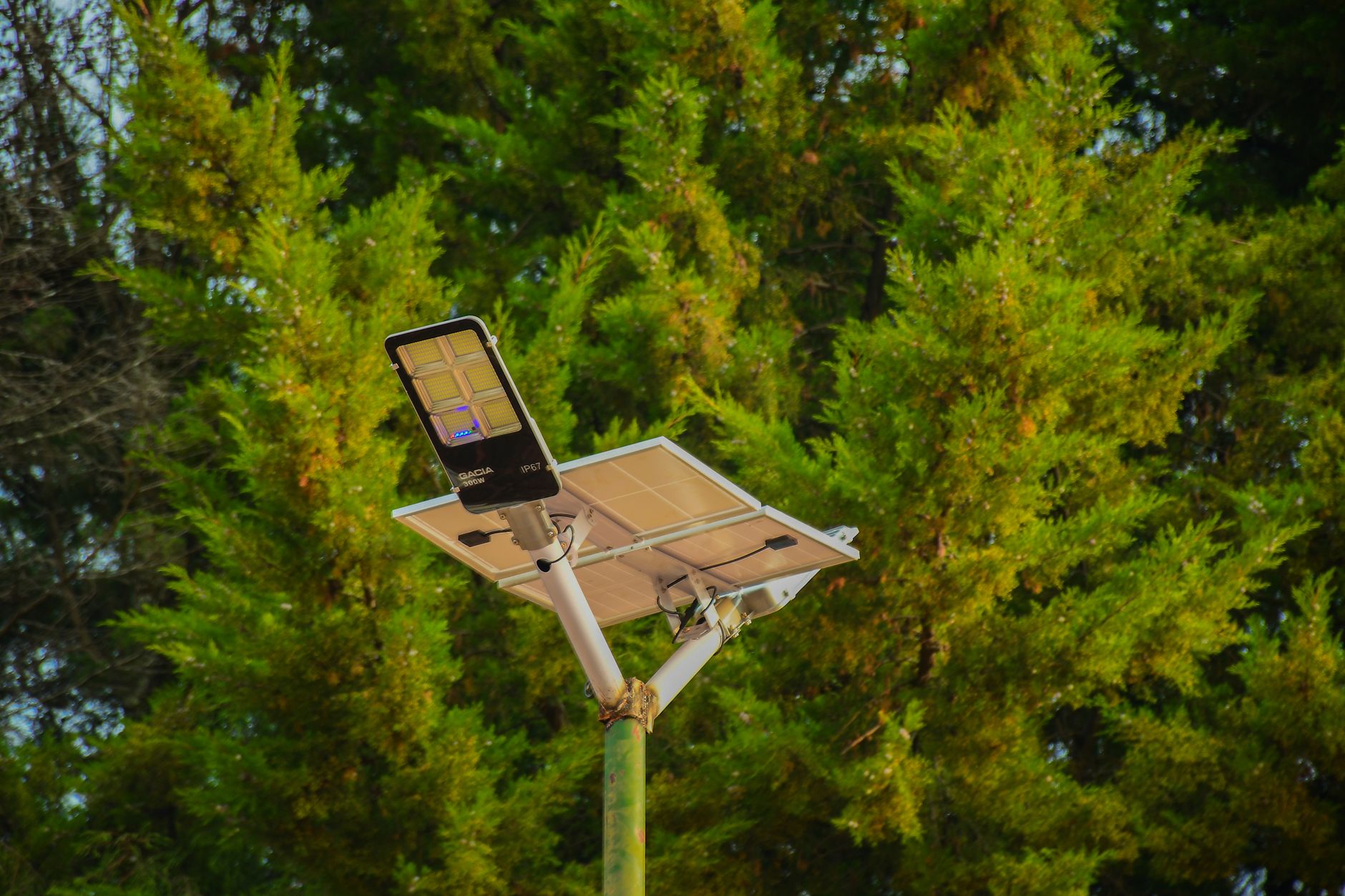
Global Market Valuation and Growth Trajectory
The global solar lighting system market reached USD 10.21 billion in 2024 [2] and is projected to reach USD 42.02 billion by 2034 at 15.20% CAGR from 2025 to 2034 [1]. SNS Insider estimates the market at USD 8.32 billion in 2023, reaching USD 29.17 billion by 2032 at 14.96% CAGR [2]. Credence Research values the solar street lights India segment alone at USD 13,653 million in 2024, reaching USD 43,540.23 million by 2032 at 15.6% CAGR [3]. These three independent forecasts converge on a 15-15.6% CAGR corridor, signaling robust expansion.
Solar panel and battery costs have fallen by more than 80% over the past decade [1], making solar lighting economically superior to grid-tied alternatives in off-grid and hybrid configurations. Over 35% of solar lighting installations now serve remote and underserved regions globally [1]. The technology reduces grid electricity consumption by 70-90% compared to conventional lighting [1].
The closeness of the three projections matters more than any single figure. When independent research houses, working with different scope definitions and survey bases, land inside the same growth corridor, the underlying signal is structural rather than methodological. Three forces anchor that signal. Urban expansion keeps pulling lighting demand into areas where trenching grid cable is slow and expensive. Component economics keep improving as panel and battery supply chains scale. And municipal climate commitments increasingly treat every street light as both an emissions line item and a visible proof point for voters.
Forecast Comparison Table
| Forecast Source | 2024 Value | 2032/2034 Value | CAGR | Scope |
|---|---|---|---|---|
| SNS Insider | USD 8.32B | USD 29.17B (2032) | 14.96% | Global solar lighting system market |
| Precedence Research | USD 10.21B | USD 42.02B (2034) | 15.20% | Global solar lighting system market |
| Credence Research | USD 13,653M | USD 43,540M (2032) | 15.6% | Solar street lighting segment |
Market Segmentation and Technology Landscape
By Light Source
LED technology captured 78% revenue share in 2023 [1] and is expected to maintain dominance through 2034. Modern LED modules pair high light conversion efficiency with a long service life, which keeps the LED segment ahead of every other light source across off-grid, hybrid, and commercial deployments [1][4].
By Grid Type
Off-grid systems commanded 65% revenue share in 2023 [1] and dominated in 2024 [3], driven by rural electrification in Asia-Pacific and Africa. The hybrid segment (solar + grid backup) is the fastest-growing, with significant CAGR projected through 2034 [1]. Hybrid systems integrate solar with grid backup, ensuring reliability during extended cloudy periods while maintaining material energy savings over pure grid power [1].
The split between off-grid and hybrid architectures also reflects two different problems. Off-grid wins where the grid is absent or unreliable, because it removes the transmission question entirely. Hybrid wins where the grid exists but is expensive or erratic, because it converts a lighting system from a pure consumer of purchased power into a partially self-supplying asset. Procurement teams in monsoon belts tend to specify hybrid for exactly this reason: the grid acts as a rainy-day reserve while the solar array carries the base load through most of the year.
By Application
Commercial applications captured 50% revenue share in 2023 [1] and led the market in 2024 [3], encompassing street lighting, parking lots, and industrial perimeters. The highways and roadways segment is the fastest-growing application, driven by municipal smart city programs and rural electrification [1][3]. Off-grid solar solutions provided electricity access to over 560 million people worldwide by end of 2023 [7].
Highways and roadways are the swing application because lighting long corridors is where grid-connected lighting is most expensive per kilometre. Every kilometre of conventional highway lighting requires cabling, trenching, transformers, and metering, and each of those cost lines disappears with a standalone solar pole. Rural electrification programmes compound the effect, because they treat solar lighting as the fastest unit of visible progress a district administration can deliver.
Battery Technology Comparison Table
| Battery Type | Cycle Life | Calendar Life | Temperature Performance | Cost Advantage |
|---|---|---|---|---|
| LiFePO4 | 2,000-3,000 charge-discharge cycles | 8-12 years | Stable in 45°C+ heat | 2-3x lower TCO over 10 years |
| Lead-Acid | 300-500 cycles | 2-4 years | Degrades rapidly in high heat | Higher replacement frequency |
India's Solar Street Lighting Landscape
India's solar street lighting market reached USD 1.07 billion in 2024 [4] and is projected to reach USD 3.54 billion by 2033 at 14.21% CAGR [4]. The country has installed more than 1.34 crore LED street lights through government programmes as of January 2025 [4].
Flagship Government Programmes
Street Lighting National Programme (SLNP) implemented by EESL has deployed over 1.34 crore LED street lights across Urban Local Bodies and Gram Panchayats as of January 2025 [4]. This has generated 9,001 million units (MUs) annual energy savings, reduced peak demand by 1,500 MW, and cut 6.2 million tonnes CO2 annually [4].
Atal Jyoti Yojana (AJAY) has deployed 2.72 lakh solar street lights across two phases in underserved constituencies [4]. Phase-II budgeted Rs 761 crore (Rs 571 crore MNRE + Rs 190 crore MPLAD) covering 3,04,500 solar street lights of 12W capacity [5]. As of March 2020, 1,35,577 SSLs installed (44.5% of target) with 9,49,039 W total wattage [5]. UP: 79,611; Bihar: 29,967; Assam: 6,673; Jharkhand: 10,582; Odisha: 8,743 SSLs installed [5].
Smart Cities Mission and AMRUT 2.0 together replaced 62.78 lakh conventional street lights with LED equivalents [4]. AMRUT's own energy audits record 88 lakh streetlights replaced against a target of 101 lakh, saving 193 crore units of electricity and cutting 15.4 lakh tonnes of CO2 annually, the largest single LED retrofit block behind SLNP [8].
PM-KUSUM Component B provides a capital subsidy of 30% for standalone solar systems in agricultural zones and rural gram panchayats [4]. Beyond these flagship routes, MPLAD funds can be directed at solar street light installation through EESL-empanelled vendors, while the Deen Dayal Upadhyaya Gram Jyoti Yojana drives decentralised solar lighting into areas where grid extension is uneconomic [4].
The SLNP's build-own-operate-transfer model deserves particular attention because it removes the single biggest objection municipal finance officers raise: capital cost. Under the model, EESL invests in the lights, recovers its outlay from the verified energy savings, and hands the asset over at the end of the contract. For a cash-constrained urban local body, the programme converts a capital expenditure decision into an operating expense with a savings backstop. That accounting shape, more than any technology choice, is what allowed deployment to scale across states with very different balance sheets, and it is the template most new tenders now copy. Procurement under it follows EESL's standardised technical specifications, with a seven-year warranty maintenance obligation [4].
India's Solar Potential and Market Projections
India's solar potential stands at 10,830 GW with approximately 300 sunny days per year [4], which is why solar street lighting beats grid extension on economics across Tier-2 and Tier-3 cities as well as rural India.
Battery Technology and Lifecycle Economics
LiFePO4 vs Lead-Acid: The Procurement Standard
LiFePO4 batteries deliver 2,000-3,000 charge-discharge cycles with an 8-12 year calendar life [6], versus the far shorter cycle count and 2-4 year lifespan typical of lead-acid [4]. LiFePO4 chemistry stays stable in high-heat deployments where lead-acid degrades rapidly, which is why MNRE specifications now anchor procurement around it [4][6]. Battery costs have fallen by more than 80% over the past decade [1], with total battery volume in the energy sector exceeding 2,400 GWh in 2023, a fourfold increase from 2020 [3].
Lifecycle cost analysis: A system requiring battery replacement every 3 years incurs 2-3x higher lifecycle cost versus LiFePO4 over 10 years [4]. Grid-connected conventional street lights cost ₹8,000-₹12,000 per unit per year in electricity and maintenance [4]. Solar LED street lights reduce this to near-zero operational cost after payback, delivering ROI within 3-5 years [4].
The lifecycle argument is what settles tender evaluations. A lead-acid battery that must be replaced two or three times across a decade of service carries labour, logistics, and disposal costs on top of the replacement units themselves, and every replacement visit is also an outage window. LiFePO4 chemistry in a properly sized system removes most of those visits. Procurement teams have internalised this arithmetic: the upfront premium buys not just longer cycle life but fewer trucks on the road and fewer dark nights between failure and repair. MNRE's specification anchoring, which sets the battery standard for publicly funded systems, effectively writes this preference into every government tender that follows.
Battery Standards and MNRE Specifications
MNRE mandates minimum 11.1V 20Ah LiFePO4 battery with integrated BMS delivering overcharge, deep-discharge, thermal cutoff, and cell-balancing protections [6]. Minimum 2,000+ cycles at 80% depth of discharge [6]. Systems must also carry a minimum three-day (72 hours) solar-autonomy backup under MNRE guidance [4]. Total battery volume in energy sector exceeded 2,400 GWh in 2023, a fourfold increase from 2020 [3].
Standards, Certifications and Procurement Framework
Mandatory Certifications
BIS Registration: Mandatory for LED luminaires under IS 10322:2026 (Part 5, Section 3) [4], backed by BIS Act 2016 registration requirements for LED lighting products sold in India [4]. BEE Certification mandatory for grid-connected solar inverters from January 2026 under IS 17980:2022 / IEC 62891:2020 [4]. IP65 minimum for luminaire protection, IP67 recommended for flood-prone regions [4]. IK08+ vandal resistance for urban deployments [4].
Certification discipline matters in this market because the unorganised assembler segment remains large. A lighting pole that fails a BIS-marked luminaire check or ships without IP-rated housing does not fail on day one; it fails in the second or third monsoon, long after the purchase order is closed. Tenders that specify certifications explicitly are therefore not bureaucratic box-ticking. They are the only mechanism a buyer has to shift the cost of premature failure back onto the supplier instead of onto the maintenance budget.
German-Engineered vs Generic Systems
German-engineered systems pair monocrystalline panels rated at 21-23% conversion efficiency, compared to 15-17% for standard polycrystalline panels, with LiFePO4 batteries rated for 2,000-3,000 charge-discharge cycles and an 8-12 year calendar life. Generic builds still ship lead-acid batteries (300-500 cycles, 2-4 year lifespan) that need replacement years sooner [4]. Premium luminaires achieve 160-180 lumens per watt (lm/W) against 100-120 lm/W for generic alternatives, so a 30W premium lamp matches the road illuminance of a 45-50W generic unit and the pole can carry a smaller panel and battery [4]. MPPT controllers extract 25-30% more energy from the same panel than PWM controllers [4]. Die-cast aluminium housings maintain LED junction temperature below 85°C even at ambient temperatures of 50°C, while generic housings let rated life fall from 50,000 hours to 20,000-30,000 hours in practice [4]. India's summers regularly exceed 45°C in many states, which is the design case every enclosure has to survive [4].
Road Class, Illuminance and Warranty Benchmarks
Indian road lighting standards prescribe lux levels from 5-15 lux for residential roads up to 20-30 lux for arterial roads [4]. A typical 6-metre residential road needs about 5-7 lux, which a 20-30W all-in-one fixture with 160 lm/W efficacy meets at 5-6 metre mounting height with 20-metre pole spacing [4]. Credible warranties cover both luminaire and battery for a minimum of five years, and German-engineered systems offer 7-year comprehensive cover including a light-output performance guarantee [4]. Price bands for 9W-60W systems run from ₹12,000 to ₹50,000 [4]. A ₹15,000 generic unit that needs a battery at year three and an LED at year five still costs more over a decade than a ₹35,000 system backed by a seven-year warranty [4].
MNRE Duty Profiles
MNRE Model I operates dusk-to-dawn at full brightness, while Model II runs at full output for the first four hours before reducing: two duty profiles matched to India's varying usage patterns and backup requirements [4].
Regional Market Analysis
Asia-Pacific dominated with 43% global share in 2023 [1], 35% of solar street lighting market [3]. Projected USD 15.34 billion by 2034 at 15.34% CAGR [1]. China, India, Japan lead with supportive policies.
North America fastest-growing at significant CAGR, driven by federal incentives and municipal smart grid deployments [1]. Africa represents 25% of solar street lighting market [3], driven by off-grid needs. Europe holds 15% [3] with smart city integration.
Asia-Pacific's lead is structural: the region combines manufacturing depth, dense rural populations without reliable grid coverage, and governments that treat solar lighting as social infrastructure rather than a consumer good. Africa's share tells a different story, one of leapfrogging. Where extending a distribution line can take years, a solar pole is a same-quarter deliverable, and off-grid lighting becomes the fastest route to visible public services. Both regions increasingly procure through standardised tenders rather than spot purchases, which consolidates demand toward certified, bankable suppliers.
Competitive Landscape
Major players: Philips (Netherlands), Sunna Design Inc. (France), Solar Electric Power Company (USA), Solar Street Lights USA, Shenzhen Jiawei Solar Lighting (China), Eaton Corporation (USA), Greenshine New Energy (USA), Yingli Solar (China), Array Technologies (USA), Sungrow Power Supply (China) [1]. Indian tier-1: Tata Power Solar, Havells India, Bajaj Electricals, Lord's Mark Industries [4].
Competitive positioning splits along the same line as procurement: vendors who can meet certification-heavy government tenders with documented lifecycle economics on one side, and low-cost assemblers competing on sticker price on the other. The steady consolidation of demand into standardised tenders transfers share from the second group to the first, which is exactly what the regional leaderboards now show.
Emerging Technology Trends
IoT Integration and Smart Controls
MPPT controllers deliver material energy savings versus PWM designs [4]. Smart sensors enable adaptive dimming based on traffic flow, cutting nightly battery drain substantially [4]. Centralized management systems enable remote monitoring and predictive maintenance [3].
Battery Advancements
LiFePO4 dominates with 2,000+ cycles and 8-12 year life. Sodium-ion is emerging as an alternative with strong thermal tolerance and abundant precursors [4], a chemistry shift we traced in our coverage of the sodium-ion EV battery breakthrough.
Solar Panel Advancements
Monocrystalline PERC and TOPCon architectures are displacing lower-efficiency polycrystalline modules in premium builds [4]. Bifacial modules add a meaningful yield uplift from albedo gain [4]. Vertical pole-mounted PV eliminating dust accumulation [4].
Challenges and Risk Factors
High initial installation costs remain barrier despite 80%+ component cost decline [1]. Weather dependence in monsoon/cloudy regions requires 5-7 day battery autonomy in northeast India [4]. Battery degradation accelerates in high ambient heat, so hot-climate deployments must specify thermally robust chemistries [4]. Supply chain concentration in China for LiFePO4 cathodes creates geopolitical risk [4]. Unorganized assemblers supplying uncertified components erode market confidence [4].
FAQ
Which government scheme is best for solar street light installation in my municipality?
The EESL-SLNP programme offers a zero-upfront-cost BOOT model for Urban Local Bodies. For rural areas, PM-KUSUM and AJAY provide direct subsidy pathways. The right choice depends on your project's scale, location, and whether you prefer outright ownership or a service contract model. Municipal tenders increasingly bundle maintenance into the contract period, which shifts battery-failure risk to the vendor and makes the BOOT route attractive even for bodies that could self-fund.
What wattage solar street light do I need for a typical Indian residential road?
A typical 6-metre-wide residential road requires approximately 5-7 lux at road level. A 20-30W all-in-one solar street light with high efficacy, mounted at 5-6 metres height with 20-metre pole spacing, will generally meet this requirement. Always confirm with a DIALux simulation before finalising specifications.
Is LiFePO4 battery mandatory for government-funded solar street lights?
MNRE and EESL specifications increasingly favour LiFePO4 (Lithium Iron Phosphate) batteries due to their superior cycle life and safety profile. While lead-acid batteries are not universally prohibited in older scheme guidelines, LiFePO4 is now the industry standard for quality procurement and is preferred by most multilateral-funded project evaluators.
How many backup days should a solar street light battery provide in Indian conditions?
MNRE recommends a minimum of three backup days (72 hours of stored energy without solar charging). In areas with extended monsoon cloud cover, particularly northeast India and the Western Ghats coastal belt, five to seven backup days are advisable. This requires careful sizing of both the panel and the battery capacity. Oversizing autonomy is cheaper than it looks: the incremental panel and battery cost is a one-time outlay, whereas a dark street during a dispute over repair responsibility carries a public-safety cost every night until it is fixed.
What does IP67 certification mean for a solar street light?
IP67 means the luminaire housing is fully dustproof (rated 6) and can withstand immersion in water up to one metre for 30 minutes (rated 7). This is significantly more robust than the IP65 baseline (dustproof and protected against water jets). IP67 is recommended for flood-prone regions and heavy monsoon areas.
What is the typical payback period for solar street lights in India?
For municipal projects replacing grid-connected HPS or conventional LED lights, the payback period is typically 3-5 years, depending on the local electricity tariff (currently ₹6-₹10 per unit in most states for commercial/municipal use) and the system's maintenance cost baseline. After payback, the system delivers near-zero operational cost for the remaining 10-15 years of service life.
Are solar street lights suitable for India's cloudy northern winters?
Yes, when properly sized. Monocrystalline panels with 21%+ efficiency and MPPT charge controllers can generate adequate energy even on overcast days, as they respond to diffuse light. Systems intended for deployment in Punjab, Himachal Pradesh, or Jammu & Kashmir should be specified with larger panel wattage (typically 1.5-2x the luminaire wattage) and extended battery backup to account for reduced winter insolation.
Sources & Verifications
-
SNS Insider. Solar Lighting System Market Size, Trends, Growth Report 2032. 2025. https://www.snsinsider.com/reports/solar-lighting-system-market-6237
-
Precedence Research. Solar Lighting System Market Size to Worth USD 42.02 Bn by 2034. 2026. https://www.precedenceresearch.com/solar-lighting-system-market
-
Credence Research. Solar Lighting Systems Market Size, Growth and Forecast 2032. 2024. https://www.credenceresearch.com/report/solar-lighting-system-market
-
Solar LED Street Light. Solar Street Lights in India: Government Schemes, Standards & Buying Guide 2026. https://solar-led-street-light.com/solar-street-lights-in-india/
-
Saur Energy. Govt Extends Phase-II of Atal Jyoti Yojana Till Mar 2021. 2020. https://www.saurenergy.com/solar-energy-news/govt-extends-phase-ii-of-atal-jyoti-yojana-till-mar-2021
-
Ministry of New and Renewable Energy. Standard, Specification & Benchmark Cost. 2025. https://mnre.gov.in/en/solar-standard-specification-benchmark-cost/
-
GOGLA. Global Off-Grid Solar Market Report 2026. https://www.gogla.org/wp-content/uploads/2026/06/GOGLA_Global-Off-Grid-Solar-Market-Report_2026_DEF3.pdf
-
Press Information Bureau, Government of India. 6 Years of Urban Transformations: AMRUT Streetlight Replacement Statistics. 2021. https://pib.gov.in/PressReleasePage.aspx?PRID=1730341
Post a Comment