
Space Exploration Technologies Corp has officially listed its common stock on the public market, completing the largest initial public offering in global financial history. Under the ticker symbol SPCX, the rocket manufacturer and satellite operator drew historic levels of capital and demand.
On Friday, June 12, 2026, SpaceX completed its highly anticipated transition to the public market by debuting on the Nasdaq stock exchange. Under the ticker symbol SPCX, the company priced its initial public offering at 135.00 dollars per share on June 11, 2026. The offering raised 75 billion dollars in new capital, setting a global financial record. Shares opened for public trading on June 12 at 150.00 dollars and rose nearly 20 percent to peak around 161.75 dollars.
The offering valued the newly public entity at approximately 1.77 trillion dollars, placing it among the most valuable corporations in the world. Leading investment banks, including Goldman Sachs, managed the underwriting consortium. Investor interest reached historic levels, with retail demand alone exceeding 100 billion dollars. Wall Street analysts characterized the listing as a turning point for aerospace investments and industrial technology markets.
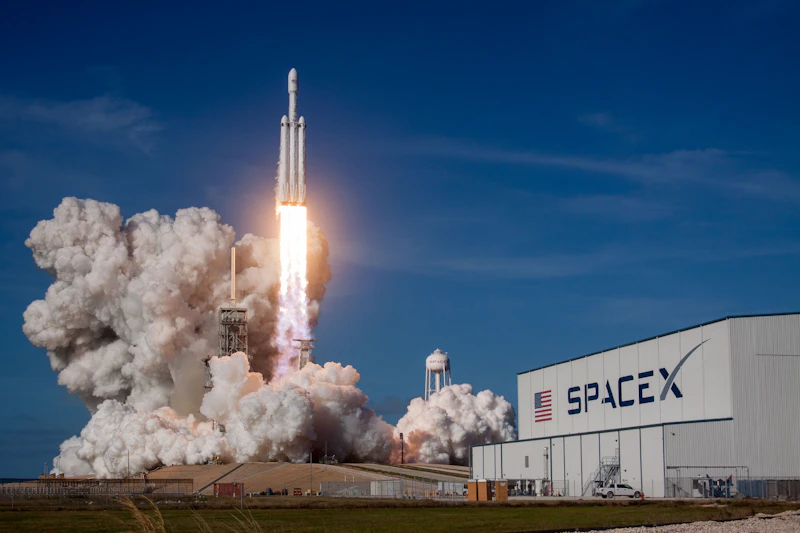 SpaceX's debut on the Nasdaq exchange on June 12, 2026, marks the first time public market investors can buy equity directly in the aerospace and satellite broadband pioneer.
- Historic Size: SpaceX raised 75 billion dollars in its IPO at 135.00 dollars per share, surpassing all previous global offerings.
- Trillion-Dollar Value: The public listing valued the space transportation company at 1.77 trillion dollars upon market entry.
- Retail Access: The underwriters allocated up to 30 percent of the offering to individual retail investors, drawing over 100 billion dollars in orders.
- Dual-Class Structure: Founder Elon Musk maintains 80 to 85 percent of the voting control through high-vote Class B shares.
- Index Inclusion: Nasdaq has fast-tracked SPCX for inclusion in the Nasdaq 100 index within 15 trading days of its listing.
The Market Debut: Tracing the Historic Nasdaq Listing of SPCX
The Nasdaq listing of SpaceX under the ticker symbol SPCX was one of the most complex market entries in financial history. The final pricing of 135.00 dollars per share was set at the top of the revised range, reflecting institutional demand that was several times oversubscribed. On the morning of June 12, 2026, Nasdaq CEO Adena Friedman stood alongside company executives to ring the opening bell, celebrating the entry of the aerospace giant into public trading.
The first trade at 150.00 dollars represented an immediate 11.1 percent premium for investors who received shares at the IPO price. The volume of trading in the first hour of market activity exceeded 45 million shares, causing temporary data latency across several major retail brokerage platforms. This volume highlights the interest from institutional and individual investors who had waited over a decade for access to the private company.
Adena Friedman, the Chief Executive Officer of Nasdaq, welcomed the company to the exchange and highlighted the importance of the partnership:
“As the home of innovation and the home of the innovation economy, Nasdaq is incredibly proud to be SpaceX's partner as it builds the physical and digital infrastructure of the future. Congratulations to the entire SpaceX team, and we cannot wait to see what comes next.”
— Adena Friedman, Nasdaq CEO, Times Square Ceremony
The listing structural parameters included several features designed to stabilize trading in the initial days. Lead underwriters, including Goldman Sachs, implemented a standard greenshoe option covering up to 15 percent of the base offering size. This option allows underwriters to buy additional shares to cover overallotments, helping to manage volatility as the stock settles into secondary market trading.
Capital Allocation: Funding Mars Colonization and AI Supercomputing
The 75 billion dollars in new capital raised through the IPO will support SpaceX's long-term capital expenditure plans. Unlike typical tech IPOs where early investors sell their shares to exit, SpaceX structured the offering primarily as primary shares, meaning the proceeds go directly to the corporate treasury. The company has outlined a deployment plan focused on scaling its heavy-lift launch vehicle and satellite communication networks.
The capital allocation strategy is structured across three core areas of development:
- Mars Colonization Capitalization: Funding the mass production of the Starship launch system and building methane fuel production facilities.
- Starlink Orbital Infrastructure: Deploying the next generation of Starlink satellites to expand global coverage and capacity.
- xAI Infrastructure Integration: Funding the construction of orbital data centers and high-density ground supercomputer clusters.
These priorities show that the public listing is designed to provide the financial resources needed to execute projects that require billions of dollars in upfront investment before generating steady cash flow.
Gwynne Shotwell, the President and Chief Operating Officer of SpaceX, addressed the employees and investors during the Nasdaq listing, reflecting on the company's journey and scale:
“Today, we make history again — and we have a history of making history. We're about 22,000 strong, and thanks go to all of you for hanging in there, for keeping a straight spine as the doubters doubt, to achieve historic things every day.”
— Gwynne Shotwell, SpaceX President and COO, June 12, 2026
This statement highlights the growth of the company, which began with a small team in California and has grown to over 22,000 employees. The proceeds from the IPO will help support this workforce and fund the facilities needed for future missions, including launch pads in Florida and Texas.
Structural Integration: The Strategic Merger of SpaceX and xAI
A key factor in the 1.77 trillion dollar valuation was the structural merger with xAI, completed in February 2026. This merger combined SpaceX's launch services and Starlink network with xAI's artificial intelligence models and supercomputing infrastructure. The resulting entity is positioned to offer integrated communication and computing services, serving commercial and government clients globally.
The merger has allowed the company to develop new products, including satellite-hosted AI inference nodes. By hosting lightweight AI models directly on Starlink satellites, the company can offer low-latency processing to remote areas, bypassing traditional terrestrial data centers. This capability has drawn interest from defense and logistics clients who require secure, distributed computing in the field.
The integration also benefits the launch business, where xAI's models are used to optimize Starship flight paths and fuel consumption. The real-time analysis of sensor data from Falcon and Starship launches has improved reuse cycles and reduced maintenance turnarounds. This synergy between AI and hardware logistics is a key competitive advantage, helping to maintain high operating margins as launch frequencies increase.
The primary digital and operational components of this merger include:
- Starlink AI Inference Nodes: Satellite-hosted computing units that process data in orbit, reducing the need for ground-based routing.
- Starship Logistics Optimization: Machine learning models that manage launch schedules, supply chain inventory, and flight path telemetry.
- Ground Supercomputing Clusters: High-density data centers powered by natural gas generators near SpaceX launch facilities.
These features illustrate how the merger has changed the company from a transportation provider into an integrated aerospace and computing platform, supporting its high market valuation.
Corporate Structure Note: The February 2026 merger between SpaceX and xAI created a unified corporate structure where Starlink's satellite network serves as the primary data transport layer for xAI's distributed computing nodes. This integration allows for real-time data processing and model training across global networks, bypassing terrestrial infrastructure limitations.
Historical Comparison: How SPCX Measures Against Saudi Aramco and Alibaba
Evaluating the scale of the SpaceX IPO requires comparing it to previous record-holding offerings. Prior to June 2026, the global record for the largest IPO was held by Saudi Aramco, which raised 25.6 billion dollars in December 2019 at a valuation of 1.7 trillion dollars. Alibaba held the technology record, raising 21.8 billion dollars in September 2014. SpaceX's 75 billion dollar raise is more than double the capital raised by Saudi Aramco, showing the scale of the SPCX offering.
The initial valuation of 1.77 trillion dollars also places SpaceX at the top of historical listings. While Saudi Aramco debuted at a similar valuation, it was a state-backed oil company with mature cash flows. In contrast, SpaceX is valued as a growth company, with much of its valuation based on future revenues from satellite broadband, orbital logistics, and AI services. This difference in valuation models highlights the high expectations investors have for the commercial space sector.
The table below compares the key parameters of the largest IPOs in history, highlighting the amounts raised, initial valuations, and performance on the first day of trading:
| Company Name (Ticker) | Offering Year | Capital Raised (USD) | Initial Valuation (Approx.) | Performance Status Badge |
|---|---|---|---|---|
| SpaceX (SPCX) | 2026 | $75.0 Billion | $1.77 Trillion | ▲ Leading |
| Saudi Aramco (2222.SR) | 2019 | $25.6 Billion | $1.70 Trillion | ≈ Parity |
| Alibaba Group (BABA) | 2014 | $21.8 Billion | $231 Billion | ▼ Behind |
| Visa Inc. (V) | 2008 | $17.9 Billion | $36 Billion | ▼ Behind |
| Meta/Facebook (META) | 2012 | $16.0 Billion | $104 Billion | ▼ Behind |
To visualize the capital raised by these historic offerings, the chart below displays the amounts raised in billions of dollars, illustrating the scale of the SpaceX IPO:
The Trillion-Dollar Frontier: Projections for the Global Space Economy
The long-term investment case for SPCX is tied to the growth of the global space economy. Morgan Stanley projects that the space industry will grow from approximately 450 billion dollars currently to over 1.0 trillion dollars by 2040. Under a bull-case scenario, the firm estimates that SpaceX's revenue could reach 3.4 trillion dollars by 2040, driven by satellite broadband, launch services, and orbital computing.
This growth is made possible by reductions in launch costs. The introduction of the reusable Falcon 9 rocket reduced the cost of sending payloads to orbit by approximately 60 percent. The fully reusable Starship system is expected to lower costs further, potentially reaching 10 dollars per kilogram. This reduction in launch costs makes new commercial applications viable, including space manufacturing and satellite constellations.
Elon Musk, the founder and Chief Executive Officer of SpaceX, discussed the long-term mission of the company and the purpose of the public listing:
“A little company that started in a warehouse in El Segundo is now going public with the largest IPO ever. There are always problems that we want to solve here on Earth, and we are solving them. But there also have to be things that get you excited about the future, that make you glad to wake up in the morning because you can't wait to see what happens next. That's the future that SpaceX wants to bring to you. That's what SpaceX is all about - to take the fiction out of science fiction.”
— Elon Musk, SpaceX CEO, Starbase Address
Musk's address highlights the company's focus on its Mars colonization program, which remains a long-term goal. While Mars missions are capital-intensive, the revenue generated by Starlink and launch contracts provides the cash flow needed to fund development, showing how the company balances commercial services with long-term goals.
Index Inflows and Derivatives: Nasdaq 100 and Leveraged ETFs
The listing of SPCX has triggered activity in secondary markets, with passive index funds preparing for forced buying. Due to special rules implemented by Nasdaq, SpaceX has been fast-tracked for inclusion in the Nasdaq 100 index, with the transition expected within 15 trading days. This will require exchange-traded funds that track the index to purchase billions of dollars in SPCX shares to match the index weighting.
The derivative market has also responded to the listing, with providers launching leveraged products. Direxion has announced the launch of the Daily SpaceX Bull 2X ETF, trading under the ticker LOFF, which will offer double the daily performance of SPCX. This product is designed to meet demand from retail traders looking to capture short-term moves in the stock, adding to the trading volume of the parent shares.
The combination of index buying, retail demand, and derivative products is expected to maintain high trading volumes for SPCX in the coming weeks. While this liquidity will support the stock price, it also introduces volatility, as trading decisions by passive funds and leveraged traders can amplify price swings. Investors will watch how the stock performs as these institutional flows enter the market, establishing a baseline for the company's trading history.
The primary listing metrics and trading parameters for the debut of SPCX include:
- Nasdaq 100 Fast-Track: Inclusion within 15 trading days, requiring passive index funds to buy shares to match index weightings.
- Direxion 2X Leveraged ETF: Trading under ticker LOFF to offer leveraged exposure to SpaceX's daily stock moves.
- Retail Allocation: Up to 30 percent of the base offering reserved for individual investors through retail brokerages.
These parameters ensure broad market participation, supporting liquidity and price discovery as the company transitions into public ownership.
Conclusion: The Dawn of the Public Space Era
The public listing of SpaceX under ticker SPCX represents a milestone for public markets and the aerospace industry. By raising 75 billion dollars at a valuation of 1.77 trillion dollars, the company completed the largest IPO in history, surpassing Saudi Aramco's 2019 record. The market debut, with shares opening at 150.00 dollars and peaking near 161.75 dollars, shows demand from institutional and retail investors alike.
In conclusion, the capital raised will fund the development of the Starship system, Starlink constellation, and AI supercomputing clusters, supporting the company's growth plans. As the stock is included in major indexes and derivative products launch, SPCX will remain a focus for global markets, serving as a benchmark for the commercial space economy in the coming decades.
Sources and References
- Nasdaq - Official listing and ceremony logs for SpaceX (SPCX): nasdaq.com
- CNBC - Financial analysis and market coverage of the SpaceX IPO: cnbc.com
- Morgan Stanley - Space Team research reports and 2040 space economy forecasts: morganstanley.com
- Securities and Exchange Commission (SEC) - S-1 registration statement and prospectus for SpaceX: sec.gov
Post a Comment