
The transition toward solar energy has accelerated globally, but popular discourse remains filled with persistent myths about its costs, efficiency, reliability, and environmental impact. By examining official data from the National Renewable Energy Laboratory (NREL), the Environmental Protection Agency (EPA), and BloombergNEF (BNEF), this analysis uses hard metrics to debunk the five most common misconceptions surrounding solar photovoltaic (PV) systems.
As the global energy transition speeds up, solar power has moved from a niche clean technology to the forefront of the international utility landscape. However, public understanding has not kept pace with the technology's rapid evolution. Misconceptions about everything from cell lifespan to grid integration continue to shape discussions among homeowners, investors, and policymakers alike. These myths often rely on outdated statistics or general half-truths that ignore the major leaps in material science and system integration achieved over the past decade.
To understand the reality of modern solar systems, we must analyze the numbers. Data from leading research bodies—including the National Renewable Energy Laboratory (NREL), the U.S. Environmental Protection Agency (EPA), and BloombergNEF (BNEF)—presents a clear picture of the technology. By tracking performance, capital costs, and lifecycle logistics across thousands of installations, these organizations show that solar energy is not only highly viable but is also rapidly becoming the cheapest, most durable energy generation source in modern history.
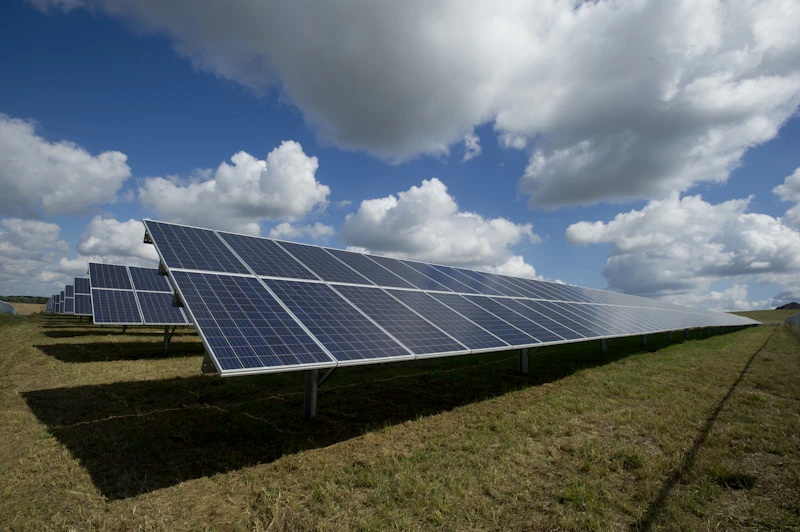 Solar installations are expanding globally, supported by massive cost reductions and significant gains in cell conversion efficiency.
- Rapid Cost Deflation: Solar PV module prices have plummeted by 90% since 2012, driving the levelized cost of electricity (LCOE) down to a global average of $39 per megawatt-hour (MWh) by 2025.
- High Environmental Recovery: Silicon photovoltaic panels consist of 95% recyclable materials by weight. Under strict frameworks like the EU WEEE Directive, up to 80% to 85% material recovery is legally mandated and industrially achievable.
- Climatic Adaptation: Solar cells perform more efficiently in colder environments due to a negative temperature coefficient (typically -0.3% to -0.5% per degree Celsius), meaning winter light is highly productive.
- Long-Term Durability: Modern crystalline silicon modules experience a median degradation rate of just 0.5% per year, ensuring they retain at least 80% to 88% of their initial capacity after 25 years in the field.
- Battery Infrastructure Boom: To manage solar intermittency, global battery energy storage additions grew to 112 gigawatts (GW) in 2025 and are projected to reach 158 GW in 2026, flattening the net-demand "duck curve."
The Economics of Photovoltaic Systems: Cost vs. Longevity
The belief that solar energy is too expensive remains one of the most common myths. This idea dates back to the early 2000s, when manufacturing was concentrated and specialized materials were highly expensive. However, over the past decade, solar technology has followed a dramatic cost curve. According to data tracked by BloombergNEF, the global price of solar photovoltaic modules has crashed by 90% since 2012. This decline is a classic example of Wright's Law: as cumulative production capacity doubled, manufacturing costs fell at a highly predictable rate. The expansion of automated factories, especially in Asia, has turned solar modules into a highly affordable global commodity.
This drop in hardware costs has directly reduced the Levelized Cost of Electricity (LCOE) for solar power. LCOE measures the total cost of building and operating an electricity-generating asset over its entire lifetime, divided by its total energy output. By 2025, the global average LCOE for fixed-axis utility-scale solar farms reached a record low of $39 per megawatt-hour ($39/MWh). At this price point, building new utility-scale solar is significantly cheaper than running existing coal or natural gas plants in most major energy markets. Furthermore, BloombergNEF projects that ongoing technological improvements and manufacturing efficiencies will drive solar LCOE down by another 30% by 2035, securing its position as the lowest-cost source of new generation worldwide.
For residential and commercial systems, this deflationary trend has shortened the return on investment (ROI) timeline. The typical residential solar installation now has a payback period of just 5 to 8 years, depending on local solar resources and state-level incentives. Given that high-quality modern panels are designed to operate for 25 to 30 years, system owners can expect 17 to 25 years of virtually free electricity after their initial investment is recovered. This long-term financial return shows that solar is no longer a luxury environmental choice, but a highly logical financial decision for both homeowners and major utilities.
The Challenge of Intermittency: Grid Integration and Storage Solutions
Another common myth is that solar energy is too unreliable to power a modern economy due to its inherent intermittency. Critics point out that solar panels cannot generate electricity at night and experience reduced output during cloudy weather, claiming this makes the grid vulnerable to blackouts unless supported by constant fossil fuel backup. While solar output does vary throughout the day, the solution does not require keeping carbon-heavy power plants online indefinitely. Instead, modern grids are integrating large-scale battery storage, improved weather forecasting, and wider transmission networks to manage these fluctuations.
The primary tool used to balance solar intermittency is the deployment of Battery Energy Storage Systems (BESS). These utility-scale battery installations store excess electricity generated during peak daylight hours—when supply often exceeds demand—and discharge it back into the grid during the evening peak. This evening ramp, often referred to as the "neck" of the net-demand duck curve, is when solar generation drops off just as residential electricity usage spikes. By deploying batteries, grid operators can smooth out this net demand curve, eliminating the need to quickly ramp up inefficient "peaker" natural gas plants.
The growth of this battery backup infrastructure has been extraordinary. According to BloombergNEF, global annual energy storage installations (excluding pumped hydro) reached 112 gigawatts (112 GW) in 2025, representing a 48% increase from the previous year. This rapid growth is projected to continue, with annual additions expected to reach 158 gigawatts (158 GW) in 2026. This battery boom is transforming grids in high-solar regions like California, South Australia, and parts of India, where utility batteries regularly supply a significant share of evening peak power, proving that grids can maintain high reliability even with high levels of renewable energy penetration.
- Mitigating the Duck Curve: Battery storage shifts midday solar surpluses to cover the steep evening demand ramp, stabilizing grid frequency.
- Reducing Power Curtailment: Excess generation that would otherwise be discarded due to grid capacity limits is stored for later use, maximizing asset productivity.
- Providing Ancillary Services: Modern smart inverters and battery systems respond in milliseconds to grid imbalances, offering faster support than traditional thermal generators.
Solar Performance Under Extreme Environments
A persistent regional myth is that solar panels do not work in cold or cloudy climates, making them useless for northern states or countries with frequent overcast conditions. This myth confuses sunlight with temperature, assuming that because panels are hot to the touch during operation, they require high temperatures to work. In reality, solar panels are electronic devices that convert light energy (photons) into electrical energy, not thermal energy. In fact, like most electronic components, solar cells perform more efficiently when they are cold.
The physical relationship between temperature and solar cell performance is measured by the temperature coefficient. For standard crystalline silicon panels, this coefficient is typically -0.3% to -0.5% per degree Celsius above the standard testing temperature of 25 degrees Celsius (77 degrees Fahrenheit). This means that for every degree the cell temperature rises above 25 degrees, its efficiency drops by up to 0.5%. Conversely, when temperatures drop below 25 degrees, the cell's voltage increases, making it run more efficiently.
As a result of this thermodynamic behavior, a bright, clear winter day in a place like Colorado or Germany can produce electricity more efficiently than a hot, humid summer day in a desert environment. In extreme desert heat, cell temperatures regularly pass 65 degrees Celsius, causing a notable drop in power output, whereas cold climates preserve voltage levels and maximize efficiency.
Similarly, cloudy weather does not stop solar generation. While heavy cloud cover does reduce the intensity of direct sunlight, solar panels are designed to capture diffuse light—light that has been scattered by water molecules and particles in the atmosphere. On a fully overcast day, modern solar panels still generate 10% to 25% of their rated capacity. This is why Germany, which has an average solar resource comparable to Alaska, successfully generated over 10% of its total annual electricity from solar power in recent years. Additionally, snow accumulation can actually boost performance once cleared from the panels, as the highly reflective snow surface increases the light reaching the cells, a phenomenon known as the albedo effect.
The Circular Economy of Solar Modules: Waste and Recycling Realities
As solar capacity expands, critics increasingly raise concerns about a looming "waste mountain," claiming that decommissioned solar panels are toxic, impossible to recycle, and destined to fill up landfills. While end-of-life management is an important issue that requires proper planning, the claim that panels cannot be recycled is false. A standard silicon solar panel is made up of approximately 95% recyclable materials by weight, consisting of a glass sheet, an aluminum frame, silicon wafer cells, copper wiring, and silver contact gridlines. The challenge is not a lack of recycling technology, but building the collection networks and refining the economics to make recycling cheaper than landfilling.
- High-Purity Glass: Accounts for 75% to 80% of panel weight, typically recycled into flat glass, fiberglass, or industrial abrasives.
- Anodized Aluminum: Comprises 10% of total weight, easily melted down for structural reuse in frames or other consumer products.
- Refined Silicon: Constitutes 3% to 5% of weight, purified chemically to be recycled back into solar cells or consumer electronics.
- Precious Metals: High-value copper and silver trace lines are recovered through chemical leaching and refining loops.
The regulatory approach to solar recycling varies significantly between the United States and the European Union. In the EU, solar panel disposal has been strictly regulated since 2012 under the Waste Electrical and Electronic Equipment (WEEE) Directive. This directive treats solar panels as electronic waste and enforces Extended Producer Responsibility (EPR). Under this framework, manufacturers and importers must finance the collection and recycling of retired panels, often through small upfront eco-fees. As a result, the EU has built a mature recycling industry that recovers up to 80% to 85% of panel materials, keeping thousands of tons of waste out of landfills.
| Solar Cell Technology | Cell Conversion Efficiency (%) | Annual Degradation Rate (%) | Temperature Coefficient (%/C) | Market Share / Adoption Level |
|---|---|---|---|---|
| P-Type PERC (Monocrystalline) | 22.5% ≈ Parity | 0.6% ▼ Behind | -0.37% ≈ Parity | Declining (35%) ≈ Parity |
| N-Type TOPCon (Tunnel Oxide) | 25.5% ▲ Leading | 0.4% ▲ Leading | -0.30% ▲ Leading | Dominant (50%) ▲ Leading |
| N-Type HJT (Heterojunction) | 26.0% ▲ Leading | 0.3% ▲ Leading | -0.26% ▲ Leading | Growing (10%) ▼ Behind |
| Perovskite-Silicon Tandem | 30.0% ▲ Leading | 1.2% ▼ Behind | -0.22% ▲ Leading | Emerging (<1%) ▼ Behind |
In contrast, the United States lacks a unified federal mandate for solar recycling, creating a fragmented regulatory environment. The EPA currently classifies most panels as non-hazardous waste, allowing them to be dumped in municipal landfills. This has created a major cost gap: disposing of a panel in a US landfill costs between $1 and $5, while recycling that same panel costs $20 to $30. Because of this cost difference, less than 10% of decommissioned US panels are recycled. To bridge this gap, several states have passed local decommissioning laws, and recycling startups are developing advanced thermal and chemical processes to recover high-purity silicon and silver, which can be sold back to manufacturers to help cover recycling costs.
Regulatory Context: The European Union's WEEE Directive enforces Extended Producer Responsibility (EPR) on solar manufacturers, requiring them to pre-fund recycling. This has established a stable market for specialized recyclers who recover over 90% of glass and aluminum, and up to 95% of high-value silver and silicon, establishing a true circular economy for renewable energy hardware.
Maintenance Myths and Structural Durability
Many prospective buyers worry about the ongoing maintenance and durability of solar panels. They fear that keeping the system running will require constant washing, specialized technical support, and frequent component replacements. This myth ignores the fundamental engineering of solar technology. Unlike gas turbines, wind generators, or coal boilers, solar PV systems are solid-state devices. They have no moving parts, which eliminates friction, mechanical wear, and the need for regular lubrication. This simple, robust design is why panels can sit on a roof for decades with minimal hands-on upkeep.
The real-world durability of solar panels is backed by extensive data. The National Renewable Energy Laboratory (NREL) manages the PV Lifetime Project, which tracks performance data from over 54,000 solar installations worldwide. NREL’s meta-analysis shows that modern crystalline silicon panels degrade at a median rate of just 0.5% per year. This means that after 10 years of exposure to rain, snow, wind, and heat, a system will still produce 95% of its original rated output. By year 25, the system will still operate at 85% to 88% of its starting capacity, lasting well beyond the typical 25-year manufacturer warranty.
In terms of day-to-day upkeep, the system requires very little attention. In most climates, regular rainfall is sufficient to keep panels clear of dust, leaves, and pollen. Studies on soiling—the build-up of dirt on panel surfaces—show that standard dust accumulation causes a power loss of less than 1.5% to 5% over a full year. For most systems, a simple cleaning with water once or twice a year is all that is needed to maintain peak output, making solar one of the lowest-maintenance power generation options available.
“The narrative that solar panels are a toxic waste time bomb is decoupled from the physics of resource recovery; 95% of a silicon PV module is glass and aluminum, both of which are readily recycled in standard industrial loops. The challenge is not technology, but aligning economic incentives.”
— Jenny Chase, Lead Solar Analyst at BloombergNEF, Annual Energy Summit
Future Outlook: Evolving Cell Tech and Circular Supply Chains
As the solar sector matures, the focus is shifting from simple capacity growth to long-term resource efficiency and advanced cell design. Over the next five years, the industry is projected to concentrate on several key developments:
- Transitioning to N-Type Technologies: Manufacturers are rapidly shifting from older P-type PERC cells to N-type technologies like TOPCon and Heterojunction (HJT), which offer higher efficiencies and lower annual degradation rates.
- Scaling Perovskite Tandem Cells: Researchers are layering perovskite materials over silicon cells to surpass the theoretical efficiency limits of silicon alone, targeting cell efficiencies over 30%.
- Standardizing Universal Waste Rules: The US EPA is considering adding solar panels to federal universal waste regulations, which would simplify transportation and handling rules to lower domestic recycling costs.
- Expanding Closed-Loop Manufacturing: Leading panel manufacturers are partnering with recyclers to source recovered silicon and silver directly, reducing supply chain vulnerability and lowering carbon intensity.
- Integrating Grid-Edge AI: Next-generation solar inverters are incorporating machine learning to predict generation patterns and coordinate battery charging, improving grid stability without human intervention.
Sources and References
- National Renewable Energy Laboratory (NREL) - Photovoltaic Degradation Rates & PV Lifetime Project: nrel.gov
- BloombergNEF (BNEF) - Clean Energy Market Outlook & Global Levelized Cost of Electricity Index: bnef.com
- U.S. Environmental Protection Agency (EPA) - End-of-Life Solar Panel Management and Regulations: epa.gov
- European Commission - Waste Electrical and Electronic Equipment (WEEE) Directive for PV Modules: ec.europa.eu
Post a Comment