
SpaceX's historic initial public offering on June 12, 2026, marked a monumental milestone for the space economy, raising a record seventy-five billion dollars. However, the debut triggered a severe capital siphon across Nasdaq, crushing other public space companies as investors rotated liquidity to fund their allocations.
The global space economy entered a new era on June 12, 2026, with the highly anticipated initial public offering (IPO) of SpaceX. Trading on the Nasdaq exchange under the ticker symbol SPCX, the rocket manufacturer and satellite internet giant completed the largest public offering in financial history. While the debut was celebrated as a milestone for commercial aerospace, its immediate impact on the public markets was characterized by a massive redistribution of capital. As institutional and retail investors scrambled to secure shares in the newly listed giant, a severe "siphon effect" pulled liquidity away from smaller, established players in the space sector, triggering a sharp sell-off across Nasdaq.
Underwritten by a syndicate led by Morgan Stanley and Goldman Sachs, SpaceX priced its offering of 555.6 million shares at $135.00 per share, raising an unprecedented $75 billion in fresh capital. The market response was overwhelming. Shares opened trading at $150.00 and closed the first day at $160.95, representing a 19.2% gain from the offering price. This initial surge pushed SpaceX's market capitalization past the $2.1 trillion threshold by the closing bell. This valuation solidified its position as a global market leader and made founder Elon Musk the world's first trillionaire, with a personal net worth estimated at over $1.1 trillion.
However, the launch of SPCX cast a long shadow over other public space companies. Investors looking to gain exposure to the sector rotated their portfolios, selling shares in existing space holdings to fund their allocations in the oversubscribed SpaceX offering. On the day of the IPO, major space-sector peers experienced double-digit stock price drops. Rocket Lab (RKLB), which had previously served as the primary public proxy for commercial space activities, fell 10%. AST SpaceMobile (ASTS), a developer of space-based cellular broadband, dropped 15%, while lunar lander manufacturer Intuitive Machines (LUNR) plummeted 16%. This capital rotation highlights the challenges smaller firms face when competing for market attention against a trillion-dollar industry leader.
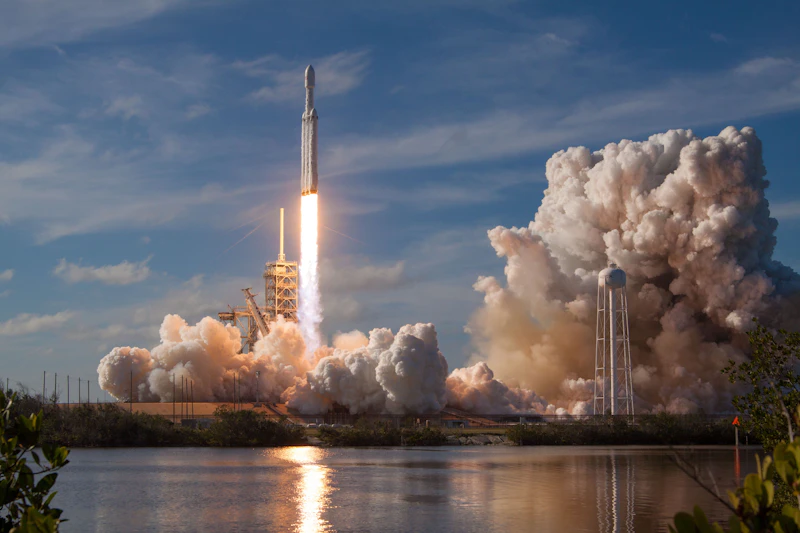 The successful Nasdaq listing of SpaceX under ticker SPCX raised $75 billion, drawing substantial capital away from other public aerospace companies.
- Historic Scale: SpaceX raised $75 billion by selling 555.6 million shares at $135 each, completing the largest IPO in history.
- Valuation Surge: A 19.2% first-day gain pushed SpaceX's market cap to over $2.1 trillion, closing at $160.95 per share.
- Capital Rotation: High investor demand of over $250 billion led to a "siphon effect" that pulled liquidity from smaller space stocks.
- Sector Pullback: Public peers faced double-digit declines, with ASTS dropping 15%, LUNR falling 16%, and RKLB sliding 10%.
- Musk Trillionaire Status: The successful debut elevated Elon Musk's net worth above the $1.1 trillion mark.
The 'Siphon Effect': How SpaceX's Massive IPO Drained Space Sector Liquidity
The sharp declines observed in Rocket Lab, AST SpaceMobile, and Intuitive Machines on June 12, 2026, were a direct result of capital rotation. In public markets, investment portfolios are often structured around specific sectors or thematic strategies. When a massive new asset enters a sector, fund managers must rebalance their portfolios to maintain their targeted allocations. Given SpaceX's dominant position in commercial launch services and satellite communications, institutional managers felt compelled to establish significant positions in SPCX, selling off smaller space holdings to raise the necessary cash.
This process was accelerated by the massive demand for the IPO. Underwriters received over $250 billion in total orders for the $75 billion offering, meaning the transaction was more than three times oversubscribed. To fund these bids, both institutional funds and retail traders liquidated other positions. Since Rocket Lab and AST SpaceMobile had been the primary proxies for public space investment, they bore the brunt of this selling pressure. This capital reallocation illustrates the "siphon effect," where a highly anticipated IPO drains liquidity from surrounding companies, temporarily depressing their valuations regardless of their operational performance.
“Some of the selling in year-to-date momentum winners was likely people getting ready to buy SpaceX. When you have a trillion-dollar asset class debut, it creates a gravitational pull that redirects liquidity across the entire tech ecosystem.”
— Josh Brown, CEO of Ritholtz Wealth Management, June 2026
This liquidity drain highlights the structural challenges faced by smaller, publicly traded space companies. In a market dominated by a single massive player, smaller firms can experience high volatility driven by capital flows rather than fundamental business developments. However, market analysts suggest that this sell-off may represent a buying opportunity for long-term investors, as the temporary liquidity pressure has depressed the valuations of operationally sound companies that continue to win contracts and hit launch milestones.
Deconstructing the Record-Breaking IPO: Pricing, Valuation, and Deal Structure
The structuring of the SpaceX IPO was unique, reflecting the company's size and market influence. Goldman Sachs and Morgan Stanley, acting as lead underwriters, chose a fixed-price offering at $135.00 per share rather than the traditional price-range bookbuild. This approach provided certainty to institutional buyers and prevented excessive pre-market speculation. The offering also featured an unusual retail allocation, with approximately 30% of the shares reserved for individual investors through partner brokerage platforms, reflecting a deliberate effort to build a broad base of long-term supporters.
The $75 billion raised will support SpaceX's capital-intensive development projects, including the Starship launch system and the expansion of the Starlink satellite constellation. Analysts estimate that maintaining this launch cadence and manufacturing capacity requires billions of dollars in annual capital expenditure. By establishing a public market valuation of over $2.1 trillion, SpaceX has secured access to public equity markets, reducing its reliance on private funding rounds and providing liquidity to early employees and venture investors who had backed the company during its two decades as a private entity.
The transaction structure utilized several key financial mechanisms to ensure stability:
- Fixed-Price Benchmark: Pricing shares at a flat $135.00 to prevent mid-week pricing hikes and stabilize demand.
- Retail Carve-Out: Allocating 30% of the offering to retail platforms to diversify the shareholder base.
- Lock-Up Provisions: Strict 180-day lock-up agreements for insiders to prevent immediate selling pressure.
While the first-day performance was strong, some research firms have expressed caution regarding the company's long-term valuation. Analysts at Morningstar assigned a fair value estimate of $63.00 per share, suggesting that the current market price implies a high probability of success for SpaceX's long-term projects, including Mars exploration and point-to-point global transit. This skepticism highlights the division between momentum-driven investors and value-focused analysts, who warn that the space sector remains highly risky and capital-intensive.
Context: A fixed-price IPO bypasses the traditional bookbuilding process where underwriters collect indications of interest within a price range. By setting a hard price of $135.00, the underwriters stabilized initial demand, though the subsequent 19.2% market gain shows that the asset was still underpriced relative to the intense public demand.
Peers in the Shadow: Rocket Lab, AST SpaceMobile, and the Repricing
To assess whether the sell-off in peer stocks represents a warning or a buying opportunity, we must analyze the fundamental health of the affected companies. Rocket Lab (RKLB) has established itself as the clear number two in commercial launch services, behind SpaceX. The company's Electron rocket is a reliable small-satellite launcher, and its larger Neutron launch vehicle is scheduled for test flights in late 2026. Prior to the SpaceX IPO, Rocket Lab had experienced strong momentum, supported by record Q1 financial performance and its inclusion in the Nasdaq-100 index. The 10% drop on June 12 was driven by capital flows rather than operational failures, suggesting that Rocket Lab's long-term business model remains intact.
Similarly, AST SpaceMobile (ASTS) represents a high-growth opportunity in satellite-to-cellular communications. The company has secured partnerships with major telecom operators, including AT&T and Verizon, to provide direct-to-cell coverage. While the 15% drop on the day of the IPO was a sharp pullback, ASTS's technology does not compete directly with Starlink's main consumer dish service; instead, it focuses on standard smartphones without specialized hardware. This difference in target markets suggests that AST SpaceMobile can coexist alongside Starlink, making the sell-off a potential entry point for investors who believe in the direct-to-cell market.
The peer stock declines on the day of the SpaceX IPO are detailed in the list below:
- Rocket Lab (RKLB): Declined 10% on June 12, closing at $11.40, down from its pre-IPO weekly high of $12.80.
- AST SpaceMobile (ASTS): Dropped 15% to close at $18.50, pulling back from its recent momentum trend.
- Intuitive Machines (LUNR): Fell 16% to close at $7.20, experiencing the largest decline among the major peers.
These drops show that the sell-off was systematic, affecting companies across different sub-sectors of the space economy. Intuitive Machines (LUNR), which focus on lunar logistics and NASA contracts, experienced the largest decline, reflecting its smaller market capitalization and higher sensitivity to capital flows. By understanding that these drops were driven by portfolio rebalancing rather than corporate failures, investors can make more informed decisions regarding asset allocation in the post-SpaceX market.
Trillion-Dollar Benchmarks: Comparing SpaceX Against Saudi Aramco and Alibaba
The scale of the SpaceX IPO is best understood by comparing it against previous record-breaking public offerings. Before June 2026, the record for the largest IPO in history was held by Saudi Aramco, which raised $29.4 billion in 2019 on the Tadawul exchange. Prior to that, Alibaba Group held the record, raising $25.0 billion in 2014 on the New York Stock Exchange. SpaceX's $75 billion transaction is more than double the size of the Saudi Aramco offering, representing a historic capital-raising event that has reshaped the global financial landscape.
This comparison becomes more significant when analyzing the valuations. While Saudi Aramco and Alibaba were established, highly profitable companies at the time of their listings, SpaceX's valuation is driven in large part by its future growth potential. Saudi Aramco's valuation was supported by vast oil reserves and stable cash flows, whereas SpaceX's $1.77 trillion initial valuation relies on the continued expansion of Starlink and the successful commercialization of Starship. This difference in valuation drivers reflects the market's willingness to fund long-term technological development, even in high-risk sectors.
| Company Name | Listing Year | Total Capital Raised | Offering Day Valuation |
|---|---|---|---|
| SpaceX (SPCX) | 2026 | $75.0 Billion | ▲ Leading |
| Saudi Aramco | 2019 | $29.4 Billion | ≈ Parity |
| Alibaba Group | 2014 | $25.0 Billion | ▼ Behind |
The comparison table shows that SpaceX has established a new benchmark for public capital raising. While Saudi Aramco and Alibaba remain massive enterprises, the SpaceX IPO demonstrates the scale of capital available for companies that capture the public's imagination and promise to redefine industries. This transaction suggests that the market is willing to support large-scale funding rounds for technology leaders, even during periods of macroeconomic uncertainty.
Strategic Asset Allocation: Navigating the Space Economy Post-SPCX
Navigating the space sector after the SpaceX IPO requires a shift in investment strategy. The introduction of SPCX provides a liquid, high-profile asset that will dominate sector indices and exchange-traded funds (ETFs). For portfolio managers, establishing a core position in SpaceX is likely to become standard, while smaller stocks like Rocket Lab and AST SpaceMobile will serve as satellite holdings to capture higher growth potential. This two-tiered market structure will change how space companies are analyzed and valued going forward.
For retail investors, the post-IPO sell-off in peer stocks may represent an attractive entry point. If a company's operational fundamentals remain strong and its growth path is unchanged, a 10% to 16% drop driven by capital rotation is a classic buying opportunity. However, investors must remain selective. Companies that rely on regular capital raises to fund their operations may face higher hurdles, as institutional capital is diverted toward SpaceX. Proactive research into cash runway, backlog, and contract wins is essential for identifying the most resilient opportunities.
“A wave of mega-IPOs could potentially weigh on future market returns and dilute valuations of existing winners as investors shift capital. However, this rebalancing also creates mispricings in high-quality peers that have been caught in the crossfire.”
— Noah Weisberger, Chief U.S. Equity Strategist, BCA Research, June 2026
To navigate this new environment, investors should follow a structured pathway based on the market's response:
- Assess Insulated Niches: Focus on companies with business models that do not compete directly with SpaceX, such as AST SpaceMobile's cellular broadband or Intuitive Machines' lunar contracts.
- Monitor Neutron Progress: Track Rocket Lab's progress toward Neutron test flights, as successful execution will solidify its position as the primary alternative launcher.
- Analyze Capital Runways: Prioritize companies with strong balance sheets and sufficient cash runways to avoid dilutive funding rounds during periods of tight sector liquidity.
By following these steps, investors can build a diversified space portfolio that benefits from both SpaceX's market leadership and the high growth potential of its peers. The space economy is projected to grow significantly over the next two decades, and the successful SpaceX IPO is a validation of the sector's long-term commercial viability, suggesting that the current volatility is a normal rebalancing process rather than a warning sign.
Conclusion: The Dawn of a Trillion-Dollar Industry
The successful listing of SpaceX on the Nasdaq exchange represents a turning point for commercial aerospace. By raising $75 billion and achieving a market capitalization of over $2.1 trillion, the company has demonstrated that the space economy has matured into a major sector of the global market. While the debut created near-term volatility and a sharp sell-off for smaller peers like Rocket Lab and AST SpaceMobile, this capital rotation is a typical market reaction to the entry of a trillion-dollar leader. As the initial volatility subsides, the increased visibility and institutional interest generated by the SpaceX IPO are likely to support the entire sector, confirming that the commercialization of space is one of the defining financial trends of the century.
Sources and References
- Nasdaq Market Intelligence - Official First-Day Trading Data for Ticker SPCX (Published June 12, 2026): nasdaq.com
- BCA Research - Global Asset Allocation and Mega-IPO Valuation Advisory: bcaresearch.com
- Yahoo Finance - Space Industry Repricing and Peer Stock Performance Analysis (Published June 13, 2026): finance.yahoo.com
- Morgan Stanley - Underwriting Report and Long-Term Space Economy Market Projections: morganstanley.com
Post a Comment