
The S&P 500 has scaled a historic closing peak of 7,617.66 points in early June 2026, propelled by a major technology rally and robust corporate earnings, while Wall Street eyes an 8,000 horizon.
The global financial landscape has experienced a historic shift in the first half of 2026, characterized by the continued dominance of mega-cap technology corporations and a resilient macroeconomic backdrop. As technology firms introduce next-generation artificial intelligence hardware and expand their infrastructure investments, equity markets have responded with sustained upward momentum. In early June 2026, the S&P 500 index reached an all-time intraday record of 7,617.66 points, trading continuously above the 7,500 threshold. This surge has occurred despite geopolitical tensions in the Middle East and tight monetary policies implemented by global central banks, highlighting the strong corporate earnings power of the modern digital economy.
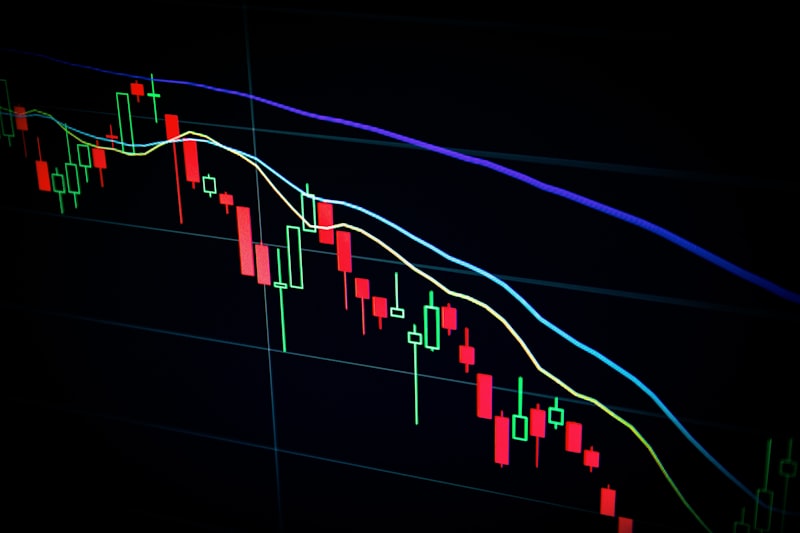 Equity markets have scaled record heights in June 2026, driven by a concentration of capital in AI-enabling tech infrastructure and resilient earnings.
- Historic Milestone: The S&P 500 reached an all-time record peak of 7,617.66 points in early June 2026, supported by a nine-week winning streak.
- Nvidia Domination: Nvidia’s market capitalization reached approximately $5.43 trillion, supported by the Computex 2026 launch of the RTX Spark superchip and the volume production of the Vera Rubin AI platform.
- Wall Street Upgrades: Goldman Sachs raised its 2026 S&P 500 year-end target to 8,000, projecting index earnings per share (EPS) of $340 for 2026 and $385 for 2027.
- Interest Rate Policy: The Federal Reserve maintained its federal funds rate at the 3.50% to 3.75% range at its April FOMC meeting, keeping a close eye on the 2% inflation target.
- Commodity Relief: Brent crude oil prices fell over 17% in the past month to $94.75 per barrel, helping ease near-term global inflationary concerns.
The Mechanics of a Tech-Driven Record: Unpacking the Computex Catalyst
The direct driver of the early June 2026 stock market records was the technology sector, specifically the hardware and cloud infrastructure providers supporting artificial intelligence. At the annual Computex 2026 conference, technology manufacturers announced several highly anticipated hardware platforms. Nvidia led these announcements by officially unveiling its new "RTX Spark" processor (previously rumored under the design code N1X). The RTX Spark is a dual-architecture processor designed for high-end personal computers and AI workstations, integrating an ARM-based 20-core Grace CPU with a Blackwell RTX GPU containing 6,144 CUDA cores. The chip supports up to 128GB of LPDDR5X unified memory, offering high computing performance for personal AI agents and gaming systems.
Simultaneously, Nvidia announced that its next-generation data center platform, named "Vera Rubin," has entered volume production as of June 2026. The Vera Rubin architecture succeeds the Blackwell data center systems, combining the Rubin GPU compute cores with a newly designed 88-core ARM-based Vera CPU. The platform is engineered to support large-scale "agentic AI" networks, which require continuous multi-agent coordination. These announcements helped boost investor sentiment, pushing Nvidia’s market capitalization to a record $5.43 trillion and driving a sector-wide rally that supported Microsoft, Apple, and semiconductor supply chain partners.
Hardware Integration: The rollout of the RTX Spark chip and the volume production of the 88-core Vera CPU represent a major milestone in AI hardware. It marks the transition of advanced generative AI workloads from centralized clouds to localized edge devices and highly efficient, co-designed data center architectures.
The market impact of these announcements was felt across global supply chains. Contract manufacturers, memory suppliers, and packaging firms all reported increased order books for the second half of 2026. The high capital expenditure budgets of the major cloud providers (hyperscalers)—estimated to exceed $200 billion collectively in 2026—continue to flow directly into semiconductor hardware, translating to strong corporate revenues and driving the concentrated market rally in the S&P 500.
Wall Street Upgrades: Goldman Sachs and JPMorgan Raise the Bar
In response to strong first-quarter corporate earnings and the sustained demand for technology infrastructure, major investment banks updated their S&P 500 index targets for 2026 and 2027. Goldman Sachs raised its 2026 year-end target for the index to 8,000 points, up from its previous forecast of 7,600. Goldman’s research team pointed to strong profit margins and revised their S&P 500 earnings per share (EPS) estimates upward. The firm now projects the index EPS to reach $340 in 2026, representing a 24% annual growth rate, and to grow further to $385 in 2027. Their analysis suggests that the 2026 market gains are driven by underlying corporate profit growth rather than multiple expansion.
Other financial institutions have adjusted their models to reflect this constructive environment. JPMorgan Private Bank updated its base-case forecast for the S&P 500 to 7,600 points for the end of 2026, up from its earlier estimate of 7,200. Furthermore, their strategists outlined a "stretch scenario" that projects the index reaching 9,000 by mid-2027. This projection is based on the expectation that productivity gains from AI adoption will begin to improve profit margins across sectors beyond the technology industry, such as financial services, healthcare, and logistics. However, leadership at the bank, including CEO Jamie Dimon, noted that while market momentum remains strong, high valuations make stocks sensitive to any shifts in interest rates or macroeconomic conditions.
"The 2026 rally is supported by strong corporate profits. We are seeing real earnings growth, with AI infrastructure companies driving about half of the index's earnings per share expansion." — Wall Street Investment Banking Strategy Note, June 2026
This optimistic sentiment is not without controversy. Some market participants caution that the high concentration of the index—where the top ten companies account for over 35% of the total index value—makes the broader market vulnerable to sector-specific setbacks. If hardware demand slows or if AI monetization takes longer than expected, a correction in a few large-cap technology stocks could impact the entire index, even if the rest of the economy remains stable.
The Forecast Ledger: Comparing Wall Street's 2026 Projections
To help understand the variations in Wall Street forecasts, the table below compares the targets and key assumptions of major investment banks as of early June 2026. These targets show a consensus expectation for continued growth, though firms differ on the exact pace of earnings expansion and the risks to interest rates.
| Financial Institution | 2026 S&P 500 Target | 2026 Projected EPS | Implied P/E Multiple | Key Forecast Driver & Outlook |
|---|---|---|---|---|
| Goldman Sachs | 8,000 | $340 | 23.5x | Strong technology profit margins and high demand for AI hardware infrastructure; bullish outlook. |
| JPMorgan (Base Case) | 7,600 | $328 | 23.2x | Steady consumer demand and stable corporate earnings, with moderate tech sector support. |
| JPMorgan (Stretch Scenario) | 9,000 (by mid-2027) | $365 (2027 Proj.) | 24.6x | Broad productivity gains from AI integration across non-tech industries; highly optimistic. |
| Wall Street Consensus | 7,750 | $332 | 23.3x | Balanced outlook reflecting strong earnings growth offset by tight central bank policy. |
Macroeconomic Crosscurrents: Federal Reserve Decisions and Commodity Pressures
While corporate earnings have supported equity markets, macroeconomic policy and commodity prices remain key factors for long-term growth. The Federal Open Market Committee (FOMC) held its policy meeting on April 28–29, 2026, electing to maintain the target federal funds rate range at 3.50% to 3.75%. Although this represents a restrictive stance compared to the previous decade, the decision was welcomed by investors as a sign of policy stability. The minutes from the meeting indicated that while inflation remains above the Fed's 2% long-term target, the committee believes the current rate is sufficient to return inflation to target over time. However, some officials noted that further policy firming could be necessary if inflation pressures return.
The Fed's policy outlook is also navigating a transition in leadership. Jerome Powell recently stepped down as Fed Chair, though he remains on the Board of Governors to assist with policy transition. The next FOMC meeting is scheduled for June 16–17, 2026, and market participants will watch the updated economic projections and interest rate dot plot closely for any signs of policy changes. The central bank's challenge is to balance inflation management against the risk of slowing economic growth, particularly as high interest rates begin to affect real estate and regional banking sectors.
In commodity markets, a significant development has been the decline in energy prices. Brent crude oil prices fell over 17% in the past month, trading at approximately $94.75 per barrel as of June 2, 2026. This decline occurred despite ongoing geopolitical risks in the Middle East and represents a relief for energy-importing economies. Lower energy costs help reduce manufacturing and transportation expenses, helping ease global inflation and giving central banks more flexibility in their interest rate policies.
Visualizing the Market Ascent: S&P 500 Milestone Tracker
The progression of the S&P 500 over the past eighteen months shows the speed of the current market cycle. Powered by corporate earnings and technology investments, the index has moved through major milestones as it heads toward Wall Street's 2026 target.
As the chart shows, the S&P 500 rose from 5,900 points at the end of 2024 to 6,845.50 points at the close of 2025. The average closing price in January 2026 was 6,929.12 points, and the index subsequently climbed to its record peak of 7,617.66 points in early June. This represents an 11.2% year-to-date increase over the first five months of 2026. If the index reaches Goldman Sachs' year-end forecast of 8,000 points, it will mark a 16.8% annual gain for 2026, reflecting a strong period of capital accumulation and corporate profitability.
Capital Markets Activity: Abaxx Exchange and Global Trading Volumes
The rising asset prices have been accompanied by high trading activity across global exchanges, showing strong institutional engagement and high market liquidity. Abaxx Exchange, a major exchange for energy and environmental futures, reported record-breaking trading activity for May 2026. The exchange cleared a total monthly volume of 286,696 contracts, representing a 12% increase over April. This volume was driven by record activity in liquefied natural gas (LNG) futures contracts, reflecting the growing global demand for energy hedging instruments as trading desks manage energy price volatility.
This high volume across derivatives markets shows that institutional investors are actively managing risks and adjusting portfolios in response to changing interest rates and geopolitical events. The combination of high trading volumes and record stock prices indicates that capital is flowing efficiently through the global financial system, providing the liquidity needed to support corporate expansion and infrastructure investments.
Upcoming Deadlines and Key Events for Financial Markets
As financial markets move through June 2026, investors face several key events, policy meetings, and tax deadlines that could affect market direction. Staying informed about these dates is essential for managing portfolio risk and identifying new investment opportunities.
- June 2, 2026 - Brookings Institution Fed Retrospective: A panel discussion focusing on monetary policy trends and the transition of Fed leadership.
- June 3-5, 2026 - Reserve Bank of India MPC Meeting: The central bank is expected to maintain its repo rate at 5.25% to balance inflation and growth.
- June 15, 2026 - Indian Advance Tax Deadline: The first installment of advance tax for the 2026-27 financial year is due for corporate and individual taxpayers.
- June 16-17, 2026 - US Federal Reserve FOMC Meeting: The committee will release updated interest rate dot plots and economic growth forecasts.
- Nvidia RTX Spark CPU/GPU Superchip: Dual-architecture processor featuring a 20-core Grace CPU and 6,144 Blackwell GPU cores for edge devices.
- Nvidia Vera Rubin AI Platform: Next-generation data center platform featuring an 88-core ARM-based Vera CPU for large-scale agentic networks.
- LPDDR5X Unified Memory Integration: Hardware standard support up to 128GB of memory for real-time local model processing on personal computers.
- Verify that portfolio weights align with index concentration levels, ensuring appropriate risk management in mega-cap technology holdings.
- Monitor energy price trends and hedge against fuel cost changes, particularly as Brent crude prices test the $94.75 support level.
- Prepare for tax payments and liquidity requirements ahead of the June 15 advance tax deadline.
- Review asset allocations before the June 16-17 FOMC interest rate decision to adjust for potential changes in policy projections.
Understanding these upcoming dates allows investors to anticipate market movements and adjust their holdings accordingly. As central banks evaluate economic data and corporations complete their mid-year reviews, the next few weeks will provide important signals for the direction of equity and bond markets in the second half of the year.
Conclusion: Navigating the Bull Market's AI Horizon
The S&P 500's climb past the 7,600 mark in early June 2026 represents a strong period of corporate earnings and technological innovation. Driven by major hardware releases like Nvidia's RTX Spark processor and the Vera Rubin data center platform, technology companies continue to lead market indices to record levels. While high valuations and tight central bank policies require careful risk management, the underlying strength of corporate profits suggests that the bull market has solid fundamentals. By watching upcoming Fed meetings, policy changes, and energy price developments, investors can position their portfolios to participate in the digital economy's growth while managing the risks of a changing macroeconomic environment.
- Goldman Sachs Global Investment Research, "S&P 500 Index Target Revision and 2026-2027 Earnings Outlook," Strategy Briefing, May 2026. goldmansachs.com
- JPMorgan Private Bank, "Mid-Year Asset Allocation and the AI Productivity Cycle," Strategy Report, May 2026. jpmorgan.com
- Federal Reserve Board of Governors, "Minutes of the Federal Open Market Committee, April 28-29, 2026," Monetary Policy Releases, May 2026. federalreserve.gov
- Nvidia Corporation Investor Relations, "Nvidia Announces Computex 2026 Hardware Rollout: RTX Spark and Vera Rubin Platform Production," Press Release, June 2026. nvidia.com
- Abaxx Technologies Inc., "Abaxx Exchange Reports Record Trading Volumes for May 2026 across Energy Futures Contracts," Press Release, June 2, 2026. abaxx.tech
Post a Comment