
To mark the kickoff of the 2026 FIFA World Cup, NASA has launched a "Soccer Meets Space Science" initiative. By examining the aerodynamics of tournament soccer balls through wind tunnel testing and microgravity trials on the International Space Station, researchers are bridging the gap between orbital mechanics and the physics of the pitch.
On June 11, 2026, to coincide with the opening kickoff of the 2026 FIFA World Cup, NASA launched a scientific demonstration campaign titled "Soccer Meets Space Science." Centered around an exhibit at the FIFA Fan Festival in Houston, running from June 11 to July 19, 2026, the initiative highlights how fluid dynamics research, wind tunnel testing, and microgravity experiments on the International Space Station (ISS) have influenced the design and flight of modern tournament balls.
By examining boundary layer transitions and aerodynamic drag, aerospace engineers are demonstrating that the same physical laws governing planetary entry capsules and rocket trajectories also dictate soccer ball trajectories. This campaign aims to educate the public on the scientific principles underlying the sport, showing how orbital trials translate directly to the physics of the pitch.
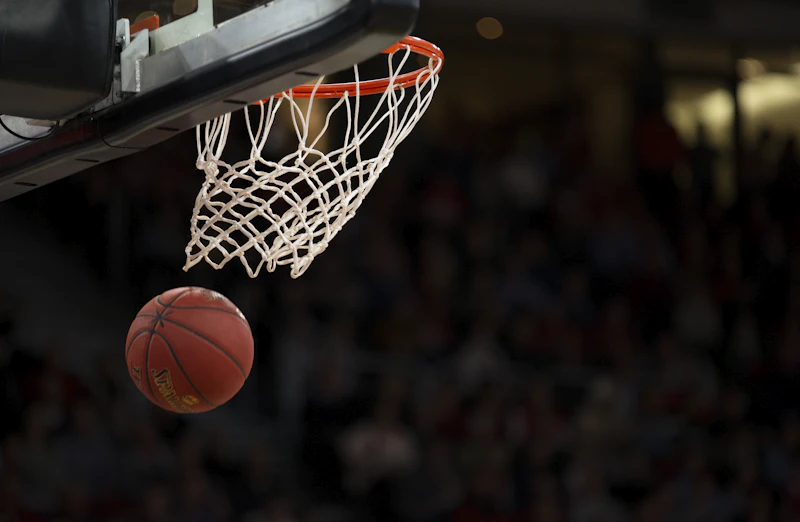 NASA's wind tunnel and orbital research projects have transformed tournament soccer balls from traditional leather panels to scientifically optimized aerodynamic projectiles.
- Campaign Launch: NASA officially launched its "Soccer Meets Space Science" initiative on June 11, 2026, establishing interactive exhibits at the Houston FIFA Fan Festival through July 19, 2026.
- Astronaut Demonstration: Astronaut Jessica Meir conducted rotational and balance experiments on the ISS, evaluating how internal sensors affect the ball's center of mass and angular momentum.
- Wind Tunnel Testing: Engineers at the NASA Ames Fluid Mechanics Laboratory utilized a 2-foot by 2-foot wind tunnel to map boundary layer transitions and critical velocity thresholds on modern balls.
- Space Program Integration: The public exhibits connect the physics of soccer ball trajectories to spacecraft entry, featuring live stage presentations from the Artemis II crew members scheduled for June 20, 2026.
- Sensor Balance Verification: Modern match balls contain a 14-gram internal sensor package polling at 500Hz, requiring high-tension cord suspension to maintain structural balance during high-velocity impacts.
The Houston Fan Festival: Bridging Lunar Exploration and World Cup Physics
The kickoff of the 2026 FIFA World Cup in Houston, Texas, provides a platform for demonstrating aerospace engineering in everyday objects. Running from June 11 to July 19, 2026, NASA's interactive exhibit at the FIFA Fan Festival in East Downtown showcases the fluid dynamics governing ball flight. Visitors can view actual test models from NASA’s Ames Research Center and data from the International Space Station, bridging the gap between orbit and the pitch.
To link sports science with human spaceflight, the showcase incorporates displays on the Artemis program, NASA's initiative to land astronauts on the Moon. A highly anticipated highlight is scheduled for June 20, 2026, when members of the Artemis II crew will appear on the Fan Festival Houston main stage to share their experiences following their lunar transit.
These crew members will discuss how physical training, team dynamics, and structural engineering connect their upcoming space mission with the world's most popular sport. By demonstrating these real-world connections, NASA aims to inspire students to pursue careers in science, technology, engineering, and mathematics.
The interactive exhibits at the Houston Fan Festival have been designed to feature several critical educational components, translating complex aerospace math into accessible concepts for sports fans of all ages:
- Wind Tunnel Artifacts: Interactive displays featuring scale models and smoke-visualization chambers from the Ames Fluid Mechanics Laboratory.
- Microgravity Video Gallery: Step-by-step video archives of astronaut Jessica Meir performing rotational balance demonstrations on the ISS.
- Artemis Program Previews: Detailed mockups of the Space Launch System (SLS) rocket and Orion spacecraft alongside astronaut training gear.
- Interactive Kick Simulators: High-speed camera installations that calculate a fan's kick velocity, spin rate, and projected Magnus curve in real time.
The Aerodynamics of Flight: Boundary Layers and the Drag Crisis
To understand how a soccer ball travels, engineers analyze the fluid boundary layer—a thin sheet of air that clings to the ball's surface. The behavior of this boundary layer determines the aerodynamic drag, characterized by the drag coefficient ($C_d$). At low velocities, the boundary layer is laminar, meaning the airflow is smooth. In this state, the flow separates early from the back of the ball, creating a large wake of low pressure.
This low-pressure wake generates a high drag force, resulting in a drag coefficient of approximately 0.45 to 0.50. Reducing this drag is key to achieving consistent flight, as a large wake causes the ball to decelerate rapidly and lose stability in mid-air.
As velocity increases, the boundary layer transitions from laminar to turbulent. In a turbulent state, the highly agitated air clings to the ball's surface longer, delaying flow separation. This delayed separation narrows the low-pressure wake, dramatically reducing the drag force in a phenomenon known as the "drag crisis." For a smooth sphere, this crisis occurs at a high velocity, but surface texture can trigger it at much lower speeds.
For modern soccer balls, engineers manipulate surface roughness to ensure the drag crisis occurs at typical kick velocities between 30 mph and 70 mph (48 km/h to 112 km/h). This transition causes the drag coefficient to drop to between 0.15 and 0.20, stabilizing the ball's trajectory and preventing sudden deviations.
To understand the timeline of aerodynamic transition, engineers trace the sequence of events as a ball is kicked and accelerates through the air, changing flow states dynamically:
- Laminar Flow Initialization: At low velocities (under 25 mph), air flows smoothly over the sphere, separating early and creating high drag.
- Boundary Layer Transition: As velocity increases, surface roughness (seams and textures) triggers micro-turbulence in the air layer nearest the ball.
- Wake Narrowing: The turbulent boundary layer clings longer to the ball's curvature, shifting the separation point further toward the rear of the ball.
- Drag Coefficient Drop: The low-pressure wake contracts, causing the drag coefficient to plummet by up to 60%, stabilizing the ball's flight path.
Understanding the Drag Crisis: The drag crisis is a critical aerodynamic threshold where a sphere's drag coefficient drops precipitously. By introducing textured panels and defined seams, engineers shift this threshold to lower speeds, ensuring that a typical pass or shot remains in a low-drag, stable state of turbulent boundary layer flow, rather than experiencing sudden deceleration as it slows down.
Ames Research Center Wind Tunnel: Unraveling the Knuckleball Phenomenon
The scientific foundation of modern soccer aerodynamics was established through extensive testing at the Fluid Mechanics Laboratory at NASA’s Ames Research Center in Silicon Valley. Led by aerodynamics specialist Dr. Rabi Mehta, researchers used a 2-foot by 2-foot wind tunnel to measure the forces acting on different match balls, including the 32-panel balls used historically and the newer 6-panel and 8-panel designs. By mounting the balls on a force balance and subjecting them to wind speeds ranging from 20 mph to 80 mph (32 km/h to 128 km/h), engineers mapped the relationship between panel configuration, seam depth, and aerodynamic stability.
A primary focus of the Ames research was the "knuckleball" phenomenon, which occurs when a player kicks the ball with very little spin (typically under 150 revolutions per minute). Without spin to stabilize flight, the boundary layer separation points on either side shift erratically as the slowly rotating seams interact with the oncoming air. This asymmetry creates lateral forces of up to 1.5 Newtons, causing the ball to zig-zag in mid-air.
The wind tunnel tests revealed that balls with fewer panels and smoother surfaces, like the 8-panel Jabulani used in the 2010 World Cup, were highly susceptible to knuckling at common shooting speeds (around 50 mph). In contrast, balls with textured surfaces and deeper seams, such as the 6-panel Brazuca, exhibited a much more stable boundary layer, narrowing the velocity window in which knuckling occurs. Commenting on the mechanics of this flight instability, Dr. Rabi Mehta explained:
“When a soccer ball is kicked without spin, the air flowing over the seams creates asymmetric forces. Because the seams are not symmetric relative to the oncoming air, the boundary layer separates at different points on each side, causing lateral forces of up to 1.5 Newtons. This results in the sudden, unpredictable movements that baffle goalkeepers.”
— Dr. Rabi Mehta, Aerodynamics Specialist at NASA Ames Research Center, June 2026
Aerodynamic analysis of soccer ball flight requires assessing three primary physical forces, each acting as a distinct vector that determines the instantaneous position of the ball:
- Gravitational Force: The constant downward pull acting on the ball's mass (typically 420 to 450 grams), dictating its parabolic descent.
- Aerodynamic Drag: The resistive force acting opposite to the direction of motion, determined by air density, frontal area, velocity, and the drag coefficient.
- Magnus Lift Force: The lateral force generated when a spinning ball creates a velocity and pressure differential between its opposing sides.
ISS Microgravity Trials: Isolating Mass Distribution and Balance
While wind tunnels on Earth are ideal for measuring aerodynamic forces, they cannot easily isolate the mechanical effects of a ball's internal mass distribution. On Earth, gravity quickly pulls a rolling or flying ball downward, masking subtle wobbles caused by minor imbalances in weight. To eliminate gravity from the equation, NASA took soccer research to orbit. During her mission aboard the International Space Station, astronaut Jessica Meir conducted a series of physical demonstrations using standard tournament match balls to evaluate their rotational stability.
Operating in the station's microgravity environment, Meir recorded how different balls behaved when spun along their principal axes. A perfectly balanced sphere spins smoothly around its center of mass, maintaining its orientation. However, if a ball has an off-center mass distribution—even by a fraction of a millimeter—static imbalance will cause it to wobble, precess, or flip its orientation erratically while floating in orbit.
Meir’s demonstrations showed that minor manufacturing defects or uneven glue distribution inside the bladder could cause significant rotational instability. This orbital research highlighted the critical need for soccer ball manufacturers to achieve precise, symmetric mass distribution, especially as advanced tracking technologies began to be embedded inside the match balls. Reflecting on the experiment, Meir remarked:
“In microgravity, we can observe the pure physics of rotation without the confounding variable of gravity. When we spin a soccer ball that has an uneven internal weight distribution, we see it wobble and precess almost immediately. This demonstrates how critical balance is to maintaining a straight, predictable flight path.”
— Jessica Meir, NASA Astronaut, during ISS STEM Demonstration
The Smart Ball Revolution: 500Hz Sensors and Centered Suspension
The need for precise mass balancing became paramount with the introduction of smart soccer balls, which are used in elite tournaments like the FIFA World Cup to support semi-automated offside technology and real-time ball tracking. Inside these advanced match balls, a central sensor package is suspended directly in the geometric center of the bladder. This package consists of a 500Hz Inertial Measurement Unit (IMU) and a Ultra-Wideband (UWB) transmitter. The IMU contains a 3-axis accelerometer and a 3-axis gyroscope, which measure the ball's linear acceleration and angular velocity at a rate of 500 data points per second. This data is transmitted to receivers around the pitch in real time, providing precise contact detection for offside decisions.
Integrating this 14-gram electronic package without affecting the ball's aerodynamics or trajectory presented a major engineering challenge. To prevent the sensor from shifting during high-velocity impacts, which can exceed 80 mph and generate forces up to 100 Gs, engineers designed a central suspension system. This system consists of ten high-tension synthetic cords anchored directly to the inner bladder wall.
This suspension holds the sensor securely in the exact center of the sphere, ensuring that the ball's center of mass coincides with its geometric center. If the sensor shifted even 1 millimeter off-center, the resulting mass imbalance would create centrifugal forces during rotation, causing the ball to wobble in flight. NASA’s microgravity research on the ISS helped validate these suspension dynamics.
The manufacturing process to integrate and calibrate the internal sensor requires a sequential series of engineering checkpoints to guarantee symmetry:
- Sensor Encapsulation: Placing the 14-gram IMU and transmitter inside a shock-absorbent spherical casing.
- Tension Cord Anchoring: Attaching ten high-tensile synthetic cords from the casing to specific points on the inner bladder wall.
- Bladder Inflation: Inflating the bladder to standard operating pressure (typically 11.6 to 14.5 psi) to tension the suspension system.
- Mass Centering Calibration: Verifying through high-speed rotation checks that the center of mass remains within a 0.1-millimeter tolerance of the geometric center.
The Aerodynamic Comparison: Evolution of Match Ball Dynamics
The evolution of soccer ball design over the past few decades represents a continuous effort to optimize aerodynamic stability and flight predictability. By transitioning from the traditional 32-panel ball—consisting of 20 hexagons and 12 pentagons—to modern 6-panel or 8-panel designs, manufacturers have reduced the total seam length and modified the surface texture. While early low-panel designs like the Jabulani suffered from aerodynamic instability due to smooth surfaces, modern balls like the Al Rihla use specialized surface textures, such as macro and micro-grooves (speedshell), to deliberately trigger turbulent flow at lower speeds. This ensures a consistent drag coefficient across a wider range of velocities.
The table below provides a detailed structural and aerodynamic comparison of the three major eras of tournament soccer ball design, illustrating how modifications to panel layouts and the introduction of internal sensors have altered the physics of play:
| Design Generation | Seam Geometry & Aerodynamic Texture | Critical Velocity Threshold | Internal Sensor Integration | Flight Consistency Status |
|---|---|---|---|---|
| Traditional 32-Panel ▼ Behind | Pentagon-Hexagon layout; high seam friction; smooth panels | 45 mph (72 km/h) | None; standard bladder | Variable; high drag at low speeds ▼ Behind |
| Modern 6-to-8 Panel ≈ Parity | Thermally bonded panels; smooth surface with micro-texture | 35 mph (56 km/h) | None; standard bladder | High; reduced drag coefficient ≈ Parity |
| Smart Sensor-Embedded ▲ Leading | 20-panel Speedshell design; debossed macro and micro-grooves | 30 mph (48 km/h) | 500Hz central IMU suspended by 10 cords ▲ Leading | Optimal; predictable boundary layer flow ▲ Leading |
To visualize the aerodynamic transition of these three generations of soccer balls, the line chart below plots the Drag Coefficient ($C_d$) against flight velocity. The curves clearly demonstrate how textured modern panels shift the "drag crisis" transition to lower, more stable speed thresholds:
Conclusion: The Future of Sports Engineering in Space
The collaboration between NASA and FIFA highlights the connection between fundamental physics and modern sports. By applying wind tunnel testing and microgravity research to soccer ball design, engineers have successfully balanced advanced internal electronics while improving flight stability. As the 2026 World Cup progresses, the technology tested in orbit will ensure that every pass, shot, and free kick behaves consistently, allowing the skills of the players to determine the outcome on the pitch.
Sources and References
- NASA Ames Research Center - Aerodynamics of Soccer Balls and Wind Tunnel Testing: nasa.gov/ames
- International Space Station (ISS) - Microgravity Rotational Demonstrations by Jessica Meir: nasa.gov/station
- FIFA Fan Festival Houston - Interactive Exhibits and Artemis II Live Schedule: houstontx.gov
- NASA STEMonstrations - Science of Balance and Angular Momentum in Space: nasa.gov/stem
Post a Comment