
The June 2026 night sky features a spectacular Venus-Jupiter planetary conjunction, a Micro Strawberry Moon at apogee, and opportunities to view Mercury and Mars in unique celestial configurations.
The month of June 2026 presents a series of notable events for astronomers and casual stargazers alike. As the Northern Hemisphere approaches the summer solstice, the lengthening twilight hours offer a clear window for observing planetary movements and lunar alignments in the western and eastern horizons. The primary astronomical highlight is a remarkably close conjunction of Venus and Jupiter, which will appear side-by-side in the evening sky. Additionally, the month features Mercury’s best evening visibility of the year, a full Moon occurring near apogee, and a pre-dawn meeting of Mars and the Pleiades star cluster. By understanding the mechanics, magnitudes, and timing of these events, observers can optimize their viewing experience throughout the month.
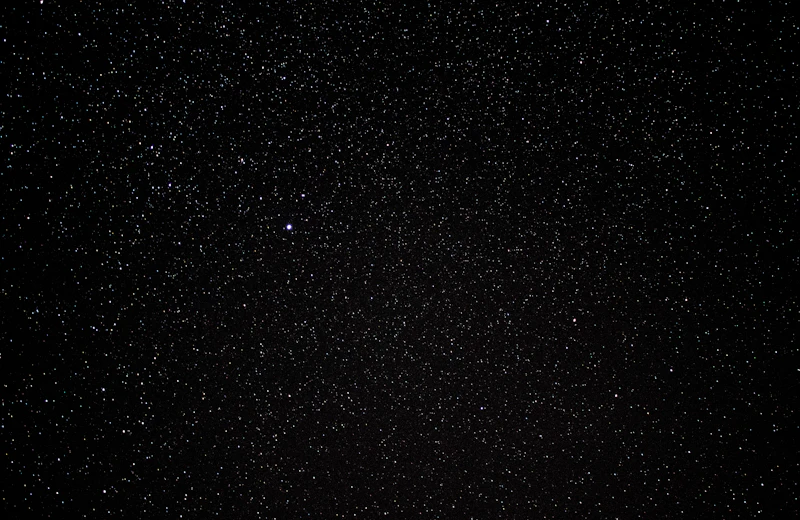 Twilight hours in June 2026 provide optimal conditions for tracking planetary alignments and astronomical configurations.
- Planetary Highlight: Venus and Jupiter reach conjunction on June 8–9, separated by only 1.5° to 1.6° in the evening sky.
- Evening Elongation: Mercury reaches its greatest eastern elongation on June 15, positioned 24.5° to 25° from the Sun.
- Lunar Event: The Micro Strawberry Moon occurs on June 29, just one day after the Moon reaches its apogee at 406,438 km.
- Solstice Timing: The astronomical summer solstice for the Northern Hemisphere occurs on June 21 at exactly 08:24 UTC.
- Pre-Dawn Alignment: Mars passes 4.5° to 5° from the Pleiades star cluster (M45) between June 27 and June 29.
The Venus-Jupiter Conjunction: A Spectacular Evening Pairing
The most visually striking event of June 2026 is the conjunction of Venus and Jupiter, which occurs on June 8 and 9. Conjunctions of these two bright planets are relatively common, occurring roughly every 13 months, but their visibility and angular separation vary. On the evening of June 9, the two objects will reach their closest approach, separated by approximately 1.5 to 1.6 degrees. This distance is roughly equivalent to the width of a little finger held at arm's length, making them appear as a brilliant "double star" in the western sky shortly after sunset.
Throughout early June, Venus will be the brighter of the pair, shining at an impressive magnitude of –4.0. Jupiter will accompany it at a magnitude of –1.9, which is still brighter than any individual star in the night sky. While the two planets appear to sit side-by-side from our perspective on Earth, they remain separated by hundreds of millions of kilometers in space, aligned only along our line of sight.
The orbital mechanics governing this conjunction are dictated by the synodic periods of the two planets. Because Venus is an inner planet and Jupiter is an outer planet, their alignment in the sky occurs when Venus catches up to and passes Jupiter along our line of sight. However, because Venus is inclined by 3.4 degrees relative to the ecliptic plane, and Jupiter by 1.3 degrees, their minimum separation varies during each conjunction. The June 2026 alignment is one of the closest and most prominent evening pairings of the decade, providing a clear illustration of orbital inclinations to observers.
"The two brightest planets low in the evening sky generate lots of interest and are easy and convenient to see with the naked eye. They easily show from day to day the movement of objects in the solar system." — Paul Delaney, Professor Emeritus at York University, 2026
To view the conjunction, observers should locate a clear horizon looking west-northwest. The planets will become visible in the fading twilight about 30 to 45 minutes after sunset. Because they are positioned relatively low in the sky, obstructions like buildings or trees can block the view. The pairing will remain visible for about an hour before sinking below the horizon.
Mercury's Apparition: Greatest Eastern Elongation
Shortly after the Venus-Jupiter conjunction, Mercury will reach its greatest eastern (evening) elongation on June 15. Because Mercury orbits closest to the Sun, it is usually lost in the solar glare. Greatest elongation represents the point in its orbit where it reaches its maximum angular separation from the Sun, offering the best viewing opportunities. On June 15, Mercury will be positioned approximately 24.5 to 25 degrees east of the Sun.
During this evening apparition, Mercury will shine at a magnitude of +0.5 to +0.7, making it visible to the naked eye under clear skies. It will appear low in the western horizon shortly after sunset, situated to the lower right of the fading Venus and Jupiter. Because Mercury sets quickly—often within 75 minutes of the Sun—observers must begin searching the horizon as soon as twilight begins. Binoculars are highly recommended to help locate the planet against the bright background of the twilight sky.
The eccentricity of Mercury's orbit plays a major role in its visibility. Because of its highly eccentric orbit (eccentricity of 0.206), its maximum separation from the Sun varies between 18 and 28 degrees during different elongations. The June 15 elongation is particularly favorable for Northern Hemisphere observers because the ecliptic plane is tilted at a steep angle relative to the western horizon after sunset, allowing the planet to hang higher in the sky for a longer duration before setting.
Astronomical Scale: Apparent magnitude is a logarithmic scale used to measure the brightness of celestial bodies, where smaller or negative numbers represent brighter objects. For comparison, the Sun shines at magnitude –26.7, the average full Moon at –12.7, and the faintest stars visible to the naked eye under dark skies are around magnitude +6.0.
Comparing June 2026 Celestial Configurations
The table below provides a comparative overview of the primary astronomical events in June 2026. By contrasting the magnitudes, peak dates, and viewing requirements, stargazers can coordinate their observations throughout the month.
| Celestial Event | Peak Date (2026) | Apparent Magnitude | Viewing Window | Recommended Equipment |
|---|---|---|---|---|
| Venus-Jupiter Conjunction | June 9 | Venus: –4.0, Jupiter: –1.9 | 30–60 mins after sunset | Naked eye or binoculars |
| Mercury at Greatest Elongation | June 15 | +0.5 to +0.7 | 45–75 mins after sunset | Binoculars recommended |
| June Summer Solstice | June 21 (08:24 UTC) | N/A | All day (Northern longest day) | None (Astronomical milestone) |
| Micro Strawberry Moon | June 29 | –12.2 (Estimated at apogee) | All night (Rising at sunset) | Naked eye or small telescope |
The Micro Strawberry Moon and Orbital Mechanics
On June 29, the full Moon of the month—historically referred to as the Strawberry Moon—will reach its peak illumination. In 2026, this event is characterized as a "micromoon" because it occurs just one day after the Moon reaches its apogee. Apogee is the point in the Moon's elliptical orbit where it is farthest from Earth. On June 28, the Moon will reach an apogee distance of approximately 406,438 kilometers (252,438 miles).
Because the full Moon occurs near this maximum distance, it will appear approximately 12% to 14% smaller and dimmer than a standard full Moon at its average distance. It is noted as the second-smallest full Moon of 2026. While the difference in size is difficult to detect with the naked eye without a direct side-by-side photo comparison, the Moon's trajectory will be notably low in the sky for Northern Hemisphere observers, which often imparts a golden or amber hue due to atmospheric scattering.
The elliptical shape of the lunar orbit is caused by gravitational perturbations from the Sun and other planets, which slowly rotate the orbit over an 8.85-year cycle known as apsidal precession. When the Moon reaches apogee, it travels slower in its orbit, which slightly alters the timing of the lunar phases. A micromoon appears roughly 30% dimmer in total area compared to a supermoon, making it an excellent target for telescopic observations, as the reduced glare allows observers to resolve delicate surface features near the terminator line more comfortably.
The public interest in named full moons like the Strawberry Moon is often met with caution by the scientific community. Astrophysicist Neil deGrasse Tyson has noted that the media and public obsession with naming full moons and hyping these events as rare can overshadow the regular patterns of our solar system. He has pointed out that while specific alignments like a Strawberry Moon coinciding with apogee are framed as unique, they are standard components of the Moon's regular orbital dynamics, which naturally feature repeating cycles over time.
Visualizing Apparent Distances from Earth
Comparing the physical distances of these celestial targets highlights the vast scale of our solar system. While they all appear as points of light on our sky, their true distances span several orders of magnitude. The chart below displays the approximate distances in millions of kilometers of our June 2026 targets at the time of their peak visibility.
As the chart demonstrates, the Moon at apogee is positioned less than a million kilometers away (0.4 million km), while Mercury, Venus, Mars, and Jupiter are located millions of kilometers away. Jupiter, the largest planet in our solar system, is positioned approximately 900 million kilometers away during its conjunction with Venus, illustrating why it appears smaller and dimmer despite its massive physical size.
The Unpredictable Bootid Meteor Shower
Active from June 22 to July 2, the June Bootid meteor shower is scheduled to reach its peak activity on the night of June 27. The Bootids are known in the astronomical community for being highly unpredictable. In most years, the shower is weak, producing a low rate of only 1 to 2 meteors per hour. However, the shower has historically produced sudden, massive outbursts, such as in 1998 and 2004, when rates reached 50 to 100 meteors per hour.
The origin of the Bootid stream is associated with Comet 7P/Pons-Winnecke, a short-period comet that completes an orbit around the Sun every 6.37 years. Over centuries, the comet has left behind dense trails of dust particles along its orbital path. When the Earth passes through these concentrated filaments, a meteor outburst occurs. To find the radiant, observers should locate the constellation Boötes, which can be found by tracking the arc of the Big Dipper's handle to the bright orange star Arcturus, the brightest star in the constellation.
For observers in 2026, viewing conditions will be challenging. A waxing gibbous Moon, which is approaching its full phase, will remain in the sky for most of the night, washing out fainter meteors. The radiant of the shower is located in the constellation Boötes, which is positioned high in the sky for Northern Hemisphere observers after sunset. To maximize chances of spotting meteors, observers should look away from the Moon and focus on darker patches of the sky.
Mars and the Pleiades Pre-Dawn Conjunction
In the final days of the month, attention shifts to the pre-dawn sky, where Mars will pass near the Pleiades star cluster (M45). This conjunction will occur between June 27 and June 29, with the objects appearing together in the east-southeast horizon roughly 90 minutes before sunrise. Mars, shining at a magnitude of +1.3, will be positioned about 4.5 to 5 degrees from the pale-blue star cluster, which has an apparent magnitude of +1.6.
The Pleiades, also known as the Seven Sisters, is an open star cluster containing over 1,000 stars, though only six or seven are visible to the naked eye. Located approximately 444 light-years from Earth, the cluster is dominated by hot, blue B-type stars. The juxtaposition of Mars—a cold, rocky planet within our own solar system—against the background of this massive stellar nursery provides a striking visual contrast. Mars will appear as a distinct orange-tinged object positioned just below the cluster, highlighting the vast difference in distance and composition between planetary and deep-space objects.
This event provides a striking color contrast for skywatchers. Mars will appear as a distinct orange-tinged object positioned just below the cluster's signature grouping of hot, young stars. While both Mars and the Pleiades are visible to the naked eye, using binoculars will reveal the individual stars of the cluster more clearly and highlight the color contrast between the planetary surface and the distant star system.
Observation Checklist & Practical Guide
To successfully observe these celestial events, proper planning is essential. Light pollution, weather conditions, and equipment selection play a major role in the quality of your stargazing sessions. The lists below outline the necessary equipment and steps to optimize your observations.
- Naked Eye: Sufficient for the Venus-Jupiter conjunction, the Micro Strawberry Moon, and brighter stars.
- Binoculars (7x50 or 10x50): Essential for locating Mercury in the twilight and resolving the Pleiades cluster.
- Small Telescope: Recommended for observing the rings of Saturn and the cloud bands of Jupiter.
- Red-Light Flashlight: Preserves night vision while adjusting equipment or checking starcharts.
- Active Dates: June 22 to July 2, 2026. Peak night: June 27.
- Expected Rate: Typically 1–2 meteors per hour, with potential for unpredictable outbursts.
- Radiant Position: Constellation Boötes, located in the northern sky.
- Moon Phase: Waxing gibbous, presenting significant light interference.
- Set an alarm for 90 to 120 minutes before local sunrise.
- Locate a viewing spot with an unobstructed view of the east-southeast horizon.
- Scan the horizon for a bright, reddish-orange object, which is Mars.
- Look slightly above Mars to find the tight, pale-blue cluster of the Pleiades stars. Use binoculars if light pollution is high.
Conclusion: A Month of Celestial Discoveries
June 2026 offers a diverse array of astronomical events that showcase the dynamic nature of our solar system. From the bright evening pairing of Venus and Jupiter to the distant orbital apogee of the Micro Strawberry Moon, these configurations provide valuable opportunities for both education and observation. By utilizing simple tools like binoculars and selecting clear, dark locations, observers can connect directly with the orbital mechanics of our neighborhood in space, turning the night sky into a classroom of scientific discovery.
- Space.com, "Venus and Jupiter Kiss: How to View the Conjunction," June 2026. space.com
- Astronomy Magazine, "The Sky This Month: June 2026 Guide," June 2026. astronomy.com
- Time and Date, "June Solstice 2026 - Summer and Winter Solstice," 2026. timeanddate.com
- Forbes Science, "A 'Micro' Strawberry Moon at Apogee," June 2026. forbes.com
- National Geographic, "Astronomical Events to Watch in June," June 2026. nationalgeographic.com
Post a Comment